
The allure of marble has captivated designers and homeowners for centuries. Its natural veining, cool touch, and luxurious appearance evoke a sense of timeless elegance. However, the reality of sourcing, installing, and maintaining natural marble can be a daunting prospect. Enter artificial marble, a modern marvel that seeks to capture the aesthetic appeal of its natural counterpart while addressing some of its inherent drawbacks. But as with many manufactured materials, questions arise about its long-term performance. Specifically, a common concern is: “Will artificial marble deform or fade over time?”
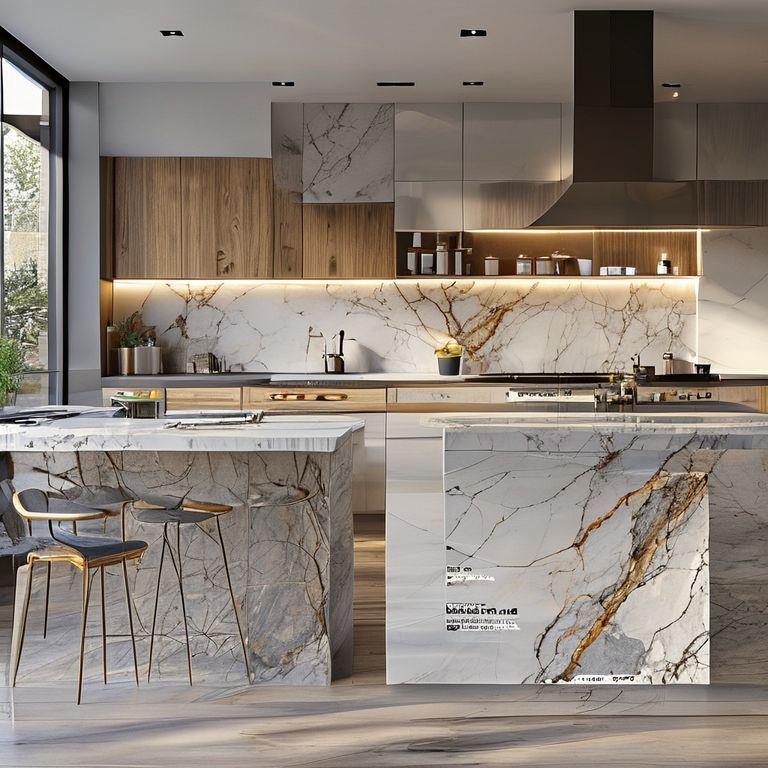
To truly answer this, we need to delve into what “artificial marble” actually encompasses. This isn’t a single, monolithic material. Instead, it’s a broad category that typically refers to engineered stone or composite materials designed to mimic the look of natural marble. The most prevalent and high-quality form is quartz surfacing, often marketed as quartz countertops or engineered quartz. These slabs are predominantly composed of natural quartz crystals (around 90-95%), bound together with polymer resins and pigments. Other forms of artificial marble might include solid surfaces, which are acrylic-based, or even certain types of porcelain or sintered stone, though these are often categorized separately due to their distinct manufacturing processes and properties. For the purpose of this discussion, our primary focus will be on the widely popular quartz-based engineered stone, as it most directly competes with and is often considered a superior alternative to natural marble for many applications.
Let’s tackle the deformation question first. Deformation, in the context of a countertop or flooring material, generally refers to warping, cracking, or significant changes in flatness or structural integrity. Natural marble, being a product of geological processes, can be prone to scratching and etching due to its relatively soft composition (Mohs hardness of 3-4). While it doesn’t typically “deform” in the sense of warping from temperature changes, it can chip or crack under impact. Engineered quartz, on the other hand, boasts a Mohs hardness of 7, placing it on par with granite. This inherent hardness, derived from the abundant quartz crystals, makes it exceptionally resistant to physical damage. The polymer resins act as a binder, not only holding the quartz particles together but also contributing to the material’s overall strength and flexibility. Unlike natural stone which can have inherent fault lines or weaknesses, engineered quartz is manufactured under controlled conditions, allowing for a more uniform and robust structure.
The fabrication process for quartz surfaces involves mixing crushed quartz with resins and pigments, then compressing and heating the mixture under immense pressure in a process called vibrocompression. This creates a dense, non-porous slab. This density and the nature of the resin binder are key to its resistance to deformation. The resins provide a degree of flexibility that allows the material to withstand minor impacts and thermal fluctuations without cracking or warping. Think of it like a very strong, tightly packed composite. While extreme, sudden temperature shocks could theoretically cause issues, for typical kitchen or bathroom environments – the placement of hot pots and pans (though trivets are always recommended), the ambient temperature variations – engineered quartz is remarkably stable. The non-porous nature also means it doesn’t absorb moisture, which can lead to swelling and deformation in some organic materials. Therefore, the direct answer to whether artificial marble (specifically quartz) deforms over time due to normal use is generally no. Its composition and manufacturing process are designed precisely to prevent this.
Now, let’s turn our attention to the equally important question of color fading. The aesthetic appeal of artificial marble is paramount, and the idea of its vibrant hues or subtle veining diminishing over the years is a significant concern for anyone investing in it. This is where the distinction between different types of “artificial marble” becomes even more critical. If we’re talking about lower-quality composites or materials not specifically designed for UV resistance, then yes, fading is a possibility. However, high-quality engineered quartz, which dominates the market for artificial marble surfaces, is remarkably resistant to color change.
The pigments used in engineered quartz are inorganic and are mixed directly into the quartz slurry before the material is compressed. This means the color is integral to the material itself, not a surface coating that can wear off or be bleached. Natural marble, while beautiful, is also porous and can be susceptible to staining and discoloration from spills or chemical exposure. Certain acidic substances can also etch the surface, dulling its shine and altering its appearance. Engineered quartz, being non-porous, is highly resistant to stains. More importantly for the fading question, the inorganic pigments are generally very stable. They are not prone to breaking down or changing color when exposed to light or common household chemicals.
The primary culprit for color fading in many materials is ultraviolet (UV) radiation. Sunlight, or even strong artificial lighting over extended periods, can break down the chemical bonds in certain pigments, leading to a loss of vibrancy. However, the binders used in high-quality quartz are also designed with UV stability in mind. While prolonged, direct exposure to intense sunlight (like in a conservatory without UV-filtering glass) might eventually have a subtle effect, for typical indoor environments – kitchens, bathrooms, living areas – the risk of significant color fading in engineered quartz is extremely low. Manufacturers typically guarantee their quartz products for many years (often 10 or even 15 years) against manufacturing defects, and this includes issues like staining and discoloration. This long warranty is a testament to the material’s inherent durability and color fastness.
So, when considering the longevity of your “artificial marble,” understanding the specific type of material is key. If you’re looking at premium quartz surfaces, the answer to whether they will deform or fade over time is a resounding no, under normal usage conditions. They are engineered for resilience, designed to replicate the beauty of natural stone while offering enhanced practical benefits. The technology behind these materials has advanced significantly, moving beyond simple mimicry to create surfaces that are not only aesthetically pleasing but also exceptionally durable and low-maintenance. The peace of mind that comes with knowing your investment will retain its stunning appearance and structural integrity for decades is a significant part of the appeal of modern engineered stone.
Continuing our exploration into the endurance of artificial marble, specifically the highly favored quartz composites, we’ve established a strong case for their resistance to deformation and color fading under typical indoor conditions. However, a comprehensive understanding requires acknowledging the nuances of material science and the varied applications these beautiful surfaces find themselves in. Beyond the kitchen island and bathroom vanity, engineered quartz is increasingly used in high-traffic areas, commercial spaces, and even outdoor kitchens (with specific formulations). Each scenario presents its unique challenges and potential impacts on the material’s longevity.
Let’s revisit the concept of deformation, but this time consider more extreme scenarios or potential installation pitfalls. While engineered quartz is exceptionally strong and stable, no material is entirely impervious to all forms of stress. The primary factor that could potentially lead to deformation is improper installation or extreme, prolonged exposure to temperatures far beyond what is typically encountered indoors. For instance, if a quartz slab is installed in a way that puts undue stress on certain points – perhaps if the supporting cabinets are not level or adequate – over a very long period, microscopic stresses could theoretically manifest. However, this is an installation issue rather than an inherent material flaw. Reputable fabricators and installers are trained to ensure the substrate is sound and the slab is properly supported, mitigating such risks.
The issue of thermal shock is also worth mentioning. While everyday heat from cooking is handled with ease, placing an extremely hot object (like a pan directly from a high-heat burner) onto a cooler quartz surface can create a rapid temperature differential. This localized, intense heat can, in rare cases, cause a crack or a change in the resin binder. This is why trivets and hot pads are universally recommended for all countertop materials, including natural stone, solid surfaces, and engineered quartz. The resin component, while strong, is still a polymer and can be affected by extreme heat. However, the crystalline quartz structure itself is highly resistant to heat. It’s the binder that is the more sensitive element in this regard. So, while deformation from heat is highly improbable in normal use, extreme misuse could theoretically lead to localized damage rather than widespread warping.
Furthermore, while we’ve focused on quartz, it’s important to remember that “artificial marble” can encompass other materials. Solid surface materials, like Corian, are acrylic-based and are also known for their seamless appearance and repairability. While they are more susceptible to scratching and heat than quartz, they are also highly resistant to staining and do not typically deform or fade under normal indoor use. Their flexibility is actually a benefit in some applications, allowing for curved designs. However, they are more prone to visible wear and tear over extended periods if not carefully maintained. Porcelain and sintered stone slabs are another category, often used for countertops and cladding. These materials are fired at extremely high temperatures, creating a dense, hard, and non-porous surface that is incredibly durable and resistant to heat, scratches, and stains. They are even less prone to deformation than quartz. The key takeaway remains that the “artificial marble” category is diverse, and the performance characteristics will vary based on the specific composition and manufacturing process.
Now, let’s delve deeper into the color-fastness of artificial marble and factors that could influence it, even subtly. As mentioned, the inorganic pigments used in quality quartz are very stable. However, the concept of “fading” can sometimes be conflated with other changes in appearance. For instance, the glossy finish on a polished quartz surface can, over many years of heavy use and cleaning with abrasive substances, lose some of its initial luster. This is a surface wear phenomenon, not a color fade. The underlying color and pattern remain vibrant, but the reflective quality of the finish might diminish slightly in high-wear zones. This is usually addressed by periodic polishing or buffing, rather than a fundamental change in the material’s color.
Another aspect to consider is the environment. While UV radiation is a primary concern for fading, other environmental factors can play a role. For materials installed in environments with very high humidity or exposure to certain industrial chemicals, degradation of the binder could theoretically occur over extended periods. However, these are highly specialized and extreme conditions, far removed from the typical residential setting. For outdoor kitchens, specifically engineered quartz formulations are often used, sometimes with enhanced UV stabilizers and different resin systems to better withstand the elements. Even then, direct, prolonged, and intense sunlight for many years could lead to subtle changes, but again, the material is designed to resist this far better than many natural materials.
The maintenance practices employed also play a significant role in preserving the appearance of artificial marble. While quartz is non-porous and stain-resistant, using harsh chemicals or abrasive cleaners can, over time, dull the surface or damage the resin binder. Simple soap and water or a mild, non-abrasive cleaner are generally sufficient for daily cleaning. Avoiding harsh scrubbing pads and strong solvents will ensure the surface remains looking its best for years to come. For other types of artificial marble, specific cleaning recommendations will apply based on their composition. For example, acrylic solid surfaces might require specific non-abrasive cleaners.
In conclusion, the question of whether artificial marble deforms or fades over time is largely answered by the type and quality of the material in question. High-quality engineered quartz, the most common and well-regarded form of artificial marble, is exceptionally resistant to both deformation and color fading under normal residential and commercial use. Its composition of hard quartz crystals bound by robust resins, coupled with stable inorganic pigments, makes it a superior choice for durability and aesthetic longevity compared to many natural stone options. While extreme misuse or improper installation could theoretically lead to issues, these are exceptions rather than the rule. When selecting artificial marble, understanding its composition and adhering to recommended maintenance practices will ensure that its beauty and integrity endure, making it a wise and lasting investment for any space. The enduring charm of artificial marble is not merely a superficial resemblance to nature; it’s a testament to advanced material science designed for a life well-lived.









