Composition and Manufacturing Processes of Artificial Stone
Artificial stone countertops, often referred to as synthetic stone or cultured stone, have become increasingly popular in modern home renovations. Their appeal lies in their striking aesthetics, durability, and relatively lower cost compared to natural stone options like marble and granite. However, as with any material used in close contact with human health, understanding their composition and manufacturing processes is crucial.

Composition of Artificial Stone
Artificial stone is primarily composed of a mixture of natural stone powder, often sourced from marble, limestone, or other minerals, and a polymer resin binder. This combination creates a solid, durable surface that mimics the appearance of natural stone. The specific ratios of stone powder to resin can vary depending on the manufacturer, which can influence both the aesthetic qualities and the potential health implications.
Manufacturing Processes
The manufacturing process of artificial stone involves several critical stages:
Stone Powder Preparation: Natural stone is pulverized into fine powder. The consistency and quality of this powder significantly affect the finished product’s appearance and durability.
Mixing: The stone powder is mixed with a polymer resin binder. This resin acts as an adhesive, holding the stone particles together to form a cohesive material.
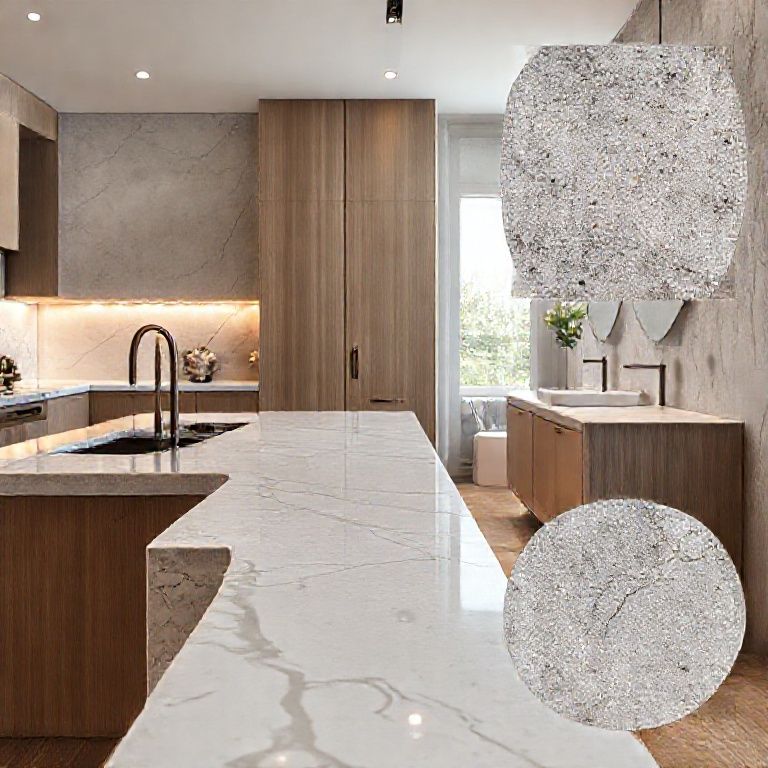
Molding: The mixture is poured into molds that give it its final shape. This process often involves degassing to remove air bubbles, ensuring a smooth and even surface.
Curing: The molded material is then cured under specific temperature and pressure conditions. This step solidifies the polymer resin, binding the stone powder particles together permanently.
Finishing: The final product may undergo various finishing processes, including polishing and sealing, to enhance its durability and appearance.
Aesthetic and Functional Benefits
Artificial stone countertops offer several functional and aesthetic advantages:
Durability: Artificial stone is highly resistant to scratches, stains, and thermal shock, making it an excellent choice for high-traffic areas. Aesthetic Versatility: It comes in a wide array of colors and patterns, allowing for extensive customization to match any design aesthetic. Cost-Effectiveness: Generally, it is more affordable than natural stone, making it accessible for a wide range of budgets.
Potential Health Risks
While artificial stone countertops are designed to be durable and long-lasting, concerns about their safety have emerged, particularly regarding the potential release of chemicals during and after the manufacturing process. Here are some key points to consider:
Volatile Organic Compounds (VOCs): During the manufacturing process, certain chemicals used in the resin binders can off-gas, releasing volatile organic compounds. VOCs are associated with various health issues, including respiratory problems and headaches.
Formaldehyde Release: Some artificial stone products may release formaldehyde, a known carcinogen, especially if the curing process is not fully complete.
Microbial Growth: Despite being non-porous, artificial stone can still harbor microbial growth if not properly sealed or maintained.
Regulatory Standards and Certifications
To address these potential health risks, several regulatory standards and certifications have been established:
UL Certification: Underwriters Laboratories (UL) provides safety certifications for many products, including artificial stone countertops, ensuring they meet safety and performance standards. ISO Standards: The International Organization for Standardization (ISO) sets global standards for various industries, including guidelines for the manufacturing of artificial stone to ensure safety and quality. VOC Limits: Regulatory bodies like the Environmental Protection Agency (EPA) in the United States have established limits on VOC emissions, which manufacturers must adhere to.
Conclusion
Understanding the composition and manufacturing processes of artificial stone countertops is essential for assessing their safety for human health. While they offer significant aesthetic and functional benefits, awareness of potential risks and adherence to regulatory standards can help mitigate these concerns. In the next part of this article, we will explore in greater detail the specific health risks associated with artificial stone countertops and provide recommendations for minimizing these risks in your home.
Health Risks and Mitigation Strategies for Artificial Stone Countertops
In the previous section, we explored the composition and manufacturing processes of artificial stone countertops, highlighting both their benefits and potential health concerns. This section delves deeper into the specific health risks associated with artificial stone and provides practical strategies for mitigating these risks.
Specific Health Risks
Artificial stone countertops, despite their many advantages, pose several health risks, primarily related to the chemicals used in their production.
1. Volatile Organic Compounds (VOCs)
Risk: During the manufacturing and curing process, artificial stone can release VOCs, which are chemicals that easily vaporize at room temperature. These compounds can include solvents, resins, and other chemical additives used in the production process.
Health Implications: Prolonged exposure to VOCs can lead to a variety of health issues, including:
Respiratory Problems: Irritation of the respiratory tract, coughing, and wheezing. Headaches and Dizziness: Short-term exposure can cause headaches, dizziness, and other neurological symptoms. Long-Term Effects: Chronic exposure may be linked to more severe health problems, including liver and kidney damage, and potential carcinogenic effects.
2. Formaldehyde Release
Risk: Some artificial stone products may release formaldehyde, especially if the curing process is incomplete or if the stone is damaged and begins to degrade.
Health Implications: Formaldehyde is a known carcinogen and can cause:
Respiratory Issues: Short-term exposure can cause irritation of the eyes, nose, and throat. Skin Irritation: Prolonged contact can lead to skin irritation or allergic reactions. Long-Term Cancer Risk: Long-term exposure is associated with an increased risk of developing cancers, particularly nasopharyngeal cancer and leukemia.
3. Microbial Growth
Risk: Despite being non-porous, artificial stone can develop microbial growth if not properly sealed or maintained.
Health Implications: Microbial growth can lead to:
Allergic Reactions: Mold and bacteria can cause allergic reactions and respiratory issues. Infections: In susceptible individuals, microbial growth can lead to infections.
Mitigation Strategies
To minimize the health risks associated with artificial stone countertops, several mitigation strategies can be employed:
1. Proper Ventilation
Strategy: Ensure that the area where the artificial stone countertops are installed is well-ventilated.
Implementation:
Natural Ventilation: Open windows and doors to allow fresh air circulation. Mechanical Ventilation: Use exhaust fans or air purifiers to remove airborne pollutants.
Benefit: Proper ventilation helps to disperse VOCs and other harmful chemicals, reducing indoor air pollution.
2. Quality Products and Certifications
Strategy: Choose high-quality artificial stone products that meet regulatory standards and have relevant certifications.
Implementation:
Research Manufacturers: Select brands that adhere to UL, ISO, and other relevant safety standards. Check Certifications: Look for products that have certifications indicating compliance with VOC limits and other safety regulations.
Benefit: High-quality products are less likely to release harmful chemicals and are manufactured with safer processes.
3. Proper Installation
Strategy: Ensure that artificial stone countertops are installed correctly by qualified professionals.
Implementation:
Follow Manufacturer Instructions: Adhere to the manufacturer’s guidelines for installation, curing, and maintenance. Professional Installation: Hire certified professionals for installation to minimize the risk of improper curing and chemical exposure.
Benefit: Proper installation ensures that the product cures fully and minimizes the risk of chemical release.
4. Regular Cleaning and Maintenance
Strategy: Regularly clean and maintain the artificial stone countertops to prevent microbial growth and ensure longevity.
Implementation:
Use Appropriate Cleaners: Use non-abrasive, pH-neutral cleaners recommended by the manufacturer. Regular Cleaning: Clean the surfaces regularly to prevent food spills and stains that could harbor microbial growth. Sealing: Reapply sealants as recommended by the manufacturer to maintain the protective barrier against stains and microbial growth.
Benefit: Regular cleaning and maintenance help to keep the countertops in optimal condition and reduce the risk of microbial growth.
5. Long-Term Monitoring
Strategy: Monitor indoor air quality and the condition of the artificial stone countertops over time.
Implementation:
Air Quality Testing: Regularly test indoor air quality to detect any unusual levels of VOCs or other pollutants. Surface Inspection: Regularly inspect the countertops for signs of damage or degradation that could lead to chemical release or microbial growth.
Benefit: Long-term monitoring helps to identify and address potential health risks early, ensuring a safer living environment.
Conclusion
While artificial stone countertops offer many benefits in terms of aesthetics and durability, it is essential to be aware of the potential health risks associated with their use. By understanding these risks and implementing appropriate mitigation strategies, you can enjoy the advantages of artificial stone while minimizing any potential health concerns. In the next section, we will explore alternative materials for countertops and compare their safety profiles to provide a comprehensive overview of the safest options for your home.
By thoroughly understanding the composition, manufacturing processes, and potential health risks associated with artificial stone countertops, you can make informed decisions to当然,我们可以继续探讨如何进一步优化和保护您的家居环境,同时对比其他常见的台面材料。
6. 替代材料及其安全性对比
6.1 天然石材 (如大理石、花岗岩、石英石)
优点:
美观自然:天然石材具有独特的纹理和颜色,看起来非常高档。 耐用性强:经过适当的护理,天然石材非常耐用。
潜在风险:
多孔性:天然石材如大理石和花岗岩是多孔的,容易吸收液体和污渍,需要定期密封。 化学物质:一些天然石材在加工过程中可能使用化学物质,这些物质可能会释放有害化学物质。
安全性建议:
选择无毒处理的天然石材。 定期密封和保养,以减少污渍和有害化学物质的释放。
6.2 不锈钢
优点:
易清洁:不锈钢非常容易清洁,不容易吸收液体和污渍。 耐腐蚀:不锈钢具有出色的抗腐蚀性能。
潜在风险:
化学处理:不锈钢在加工过程中可能使用某些化学品,但现代不锈钢材料通常经过严格的质量控制,以减少有害化学物质的使用。
安全性建议:
选择经过认证的不锈钢材料。 定期清洁和保养,以保持其光泽和耐用性。
6.3 瓷砖
优点:
耐用:瓷砖非常耐用,抗刮擦、抗污渍。 易清洁:瓷砖表面光滑,不易吸收污渍和液体。
潜在风险:
有害化学物质:在瓷砖的制造过程中,可能使用一些有害化学物质,但这些物质通常在烧制过程中被封闭在瓷砖内部,对健康影响较小。
安全性建议:
选择经过环保认证的瓷砖。 定期清洁,以保持其美观和耐用性。
6.4 木质台面
优点:
自然美观:木材具有天然的美感和纹理。 可修复:木质台面可以修复和重新上漆,延长使用寿命。
潜在风险:
有害化学物质:在木材的处理和保护过程中,可能使用一些有害化学物质,如防腐剂和漆料。 易受损:木质台面相对较软,容易受刮擦和裂痕影响。
安全性建议:
选择无毒、环保的木材和漆料。 定期保养和维护,以减少有害化学物质的释放和延长使用寿命。
7. 最终选择建议
对于追求自然美感且有条件进行定期保养的人,天然石材是一个不错的选择,但需要注意密封和保养。 对于注重易清洁和耐用性的人,不锈钢和瓷砖是非常好的选择。 对于喜欢个性化设计且能承受一定损耗的人,木质台面可以提供独特的设计,但需要注意保护和修复。
无论选择哪种材料,都应选择经过认证的产品,并定期进行维护和保养,以确保家居环境的健康和安全。