The Ultimate Guide to Understanding the Area Coverage of 3cm Marble: A Ton’s Worth of Insights
Marble has long been a preferred choice for high-end flooring due to its exquisite beauty and durability. Among various types, 3cm marble stands out as a popular option, offering a perfect balance of elegance and practicality. To help you understand how much area 3cm marble can cover per ton, we’ve put together a detailed guide that covers everything from the basics to advanced insights.
What is 3cm Marble?
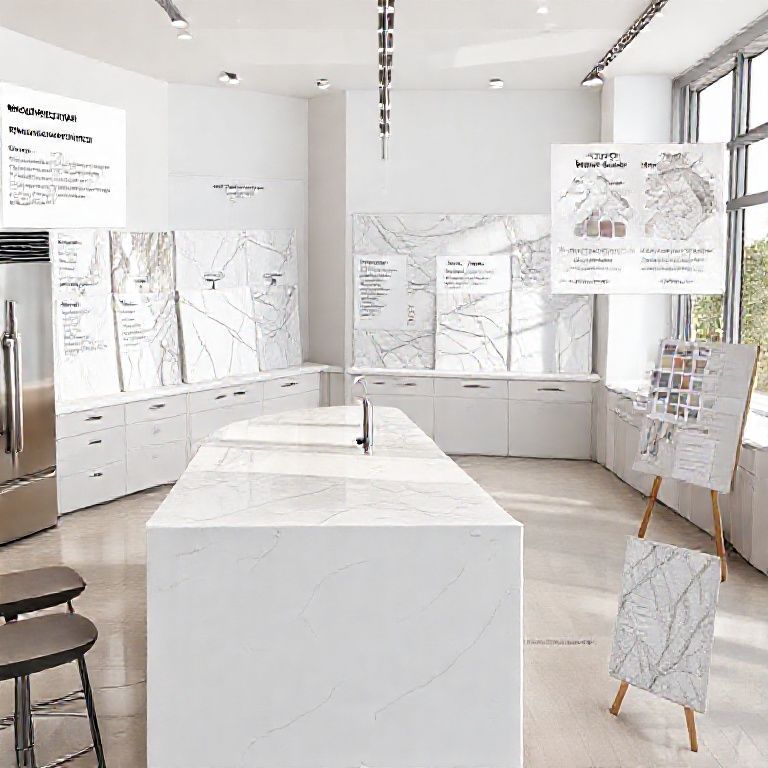
3cm marble refers to marble tiles or slabs that are 3 centimeters thick, offering a substantial depth that adds to the overall aesthetic appeal and structural integrity. These tiles are ideal for both commercial and residential spaces, providing a luxurious and timeless look.
The Basics of Marble
Marble is a metamorphic rock formed from limestone under intense heat and pressure. It’s known for its beautiful patterns and colors, which vary widely depending on the source. Marble’s durability, combined with its aesthetic appeal, makes it a favorite for flooring, countertops, and other high-traffic areas.
Area Coverage: The Core of Our Discussion
When planning a flooring project, understanding the area coverage of your chosen material is crucial. This knowledge helps you determine the quantity needed for your project and ensures you get the most out of your budget.
Calculating Area Coverage
To calculate the area coverage of 3cm marble, we need to consider the size of the tiles. Typically, 3cm marble tiles come in various sizes, but common ones are 30×30 cm, 60×60 cm, and larger formats. Here’s a simplified formula for calculating coverage:
[ \text{Area of one tile (in square meters)} = \text{length} \times \text{width} ]
For instance, a 30×30 cm tile has an area of:
[ 0.3 \, \text{m} \times 0.3 \, \text{m} = 0.09 \, \text{m}^2 ]
If you have a ton of 3cm marble and want to know how much area it will cover, you’ll need to know the density of the marble and the number of tiles in a ton.
Density of Marble
Marble has a density that typically ranges between 2,500 to 2,800 kg/m³. This density helps in understanding how much space a ton of marble will occupy and, subsequently, how many tiles it can produce.
From Tons to Square Meters
To convert the weight into usable tiles, consider the following steps:
Calculate the Volume of One Ton of Marble: [ \text{Volume} = \frac{\text{Weight (in kg)}}{\text{Density (in kg/m}^3\text{)}} ]
For instance, for a density of 2,700 kg/m³:
[ \text{Volume} = \frac{1000 \, \text{kg}}{2700 \, \text{kg/m}^3} \approx 0.37 \, \text{m}^3 ]
Determine Tile Production: Assuming the marble is cut into tiles, you need to know the volume each tile occupies. For a 30×30 cm tile, the volume is:
[ 0.3 \, \text{m} \times 0.3 \, \text{m} \times 0.03 \, \text{m} = 0.0027 \, \text{m}^3 ]
Calculate Total Number of Tiles:
[ \text{Number of tiles} = \frac{0.37 \, \text{m}^3}{0.0027 \, \text{m}^3} \approx 137 ]
Calculate Coverage per Tile: [ \text{Coverage per tile} = 0.09 \, \text{m}^2 ]
Total Coverage:
[ \text{Total coverage} = 137 \times 0.09 \, \text{m}^2 = 12.33 \, \text{m}^2 ]
So, a ton of 3cm marble can cover approximately 12.33 square meters when using 30×30 cm tiles.
Factors Influencing Coverage
Several factors can influence the actual coverage, including:
Tile Size: Larger tiles will cover more area per tile but fewer tiles per ton. Cutting Waste: Marble cutting waste can vary, affecting the total number of usable tiles. Room Dimensions: The shape and dimensions of the room will impact how tiles are laid out. Installation Method: Traditional vs. modern methods can influence the number of cuts needed.

Application of 3cm Marble
Residential Spaces
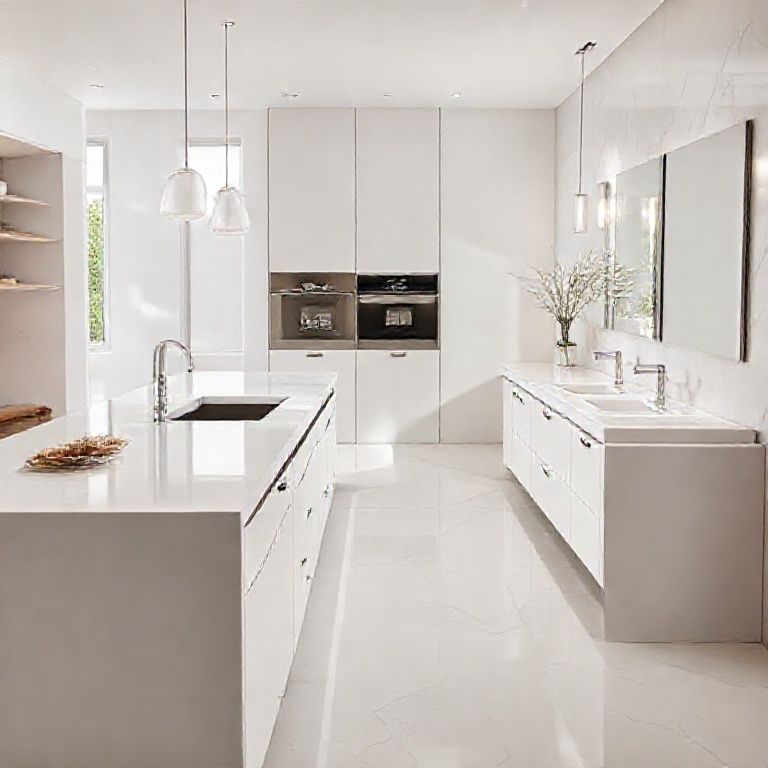
In homes, 3cm marble is frequently used for kitchens, bathrooms, and living areas. Its thickness provides a solid, durable surface that is easy to maintain.
Commercial Spaces
In commercial settings like offices, restaurants, and retail spaces, 3cm marble adds a touch of elegance and sophistication. Its robustness makes it suitable for high-traffic areas.
Unique Features of 3cm Marble
Durability: The thickness provides better resistance to scratches and stains. Thermal Insulation: Marble’s thermal properties help in reducing temperature fluctuations in the room. Aesthetic Appeal: The natural beauty of marble’s patterns makes it a standout choice for any space.
Conclusion
Understanding the area coverage of 3cm marble is essential for any renovation project. By knowing how much space a ton of marble can cover, you can better plan your project and manage your budget. Whether for residential or commercial use, 3cm marble offers a blend of beauty and practicality that is hard to beat.
Stay tuned for the second part of our guide, where we will delve deeper into advanced tips and tricks for using 3cm marble in your next renovation project.
Advanced Insights on Using 3cm Marble for Your Next Renovation Project
In the first part of our guide, we explored the basics of 3cm marble, its area coverage, and various applications. Now, let’s dive deeper into advanced insights to help you make the most out of your marble flooring project. From selection to installation, we’ve got you covered with expert tips and tricks.
Selecting the Right Marble
Types of Marble
When choosing 3cm marble, it’s important to consider the type of marble that best suits your needs:
Italian Marble: Known for its luxurious appearance and high durability. Egyptian Marble: Offers a unique pattern and a blend of color that is visually striking. Brazilian Marble: Renowned for its rich colors and intricate veins.
Quality Matters
Not all marble is created equal. Look for marble with:
Low Porosity: Reduces water absorption, making the surface more durable. High Compression Strength: Ensures the marble can withstand heavy foot traffic. Minimal Inclusions: Fewer spots or blemishes will give a cleaner, more polished look.
Planning Your Project
Measuring Your Space
Accurate measurements are crucial. Use a tape measure to determine the length and width of the area you’re covering. Remember to include areas like doorways and corners, as these will affect your total coverage calculation.
Estimating Tiles
Use the formula from the first part of our guide to estimate the number of tiles needed:
[ \text{Total number of tiles} = \frac{\text{Total area to be covered}}{\text{Area covered per tile}} ]
Factoring in Waste
Always account for waste. Marble cutting often results in scraps that can’t be reused. A common rule of thumb is to add 10-15% extra to your total tile count to cover for waste.
Installation Tips
Preparing the Subfloor
A well-prepared subfloor is essential for a successful marble installation. Follow these steps:
Clean the Surface: Ensure the floor is clean, dry, and free of any debris. Level the Surface: Use a self-leveling compound to address any unevenness. Moisture Barrier: Install a moisture barrier to protect the marble from moisture damage.
Adhesive Selection
Choose the right adhesive for your marble tiles. Epoxy or polyurethane adhesives are ideal due to their strength and flexibility. Apply the adhesive evenly using a notched trowel to ensure proper adhesion.
Tile Layout
Plan your tile layout before starting the installation:
科技与创新:包括最新的科技发展、人工智能、区块链、物联网等。
健康与生活:健康饮食、健身、心理健康、日常生活小窍门等。