The Basics of Kaolinite and Slabs
Kaolinite and slabs are two distinct materials used in various applications, especially in construction and industrial sectors. While they may share some common ground, their properties, uses, and applications set them apart in significant ways. Let’s start by diving into the basics of each material to understand their foundational characteristics.

Kaolinite: The Mineral Under the Spotlight
Kaolinite is a type of clay mineral that belongs to the phyllosilicate group, which also includes other clay minerals like illite and montmorillonite. This mineral is primarily composed of hydrated aluminum silicate, with a chemical formula of Al2Si2O5(OH)4. Kaolinite is one of the most abundant clay minerals found in nature and is renowned for its role in various industries.
Properties of Kaolinite
Chemical Composition: The primary chemical composition of kaolinite is aluminum silicate. This composition gives it a relatively low thermal expansion coefficient, making it highly stable at high temperatures.
Physical Characteristics: Kaolinite has a low plasticity and is relatively hard when dry but becomes soft when wet. It has a smooth texture and a white to light gray color. Its particle size is relatively small, often less than 2 micrometers.
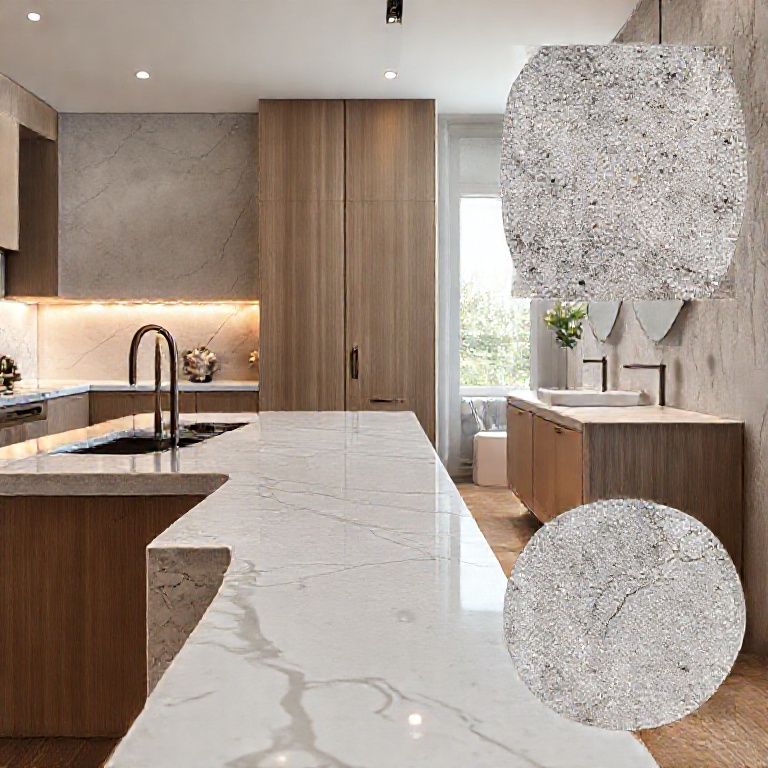
Surface Area: Kaolinite has a significant surface area, which contributes to its adsorption properties. This makes it useful in various applications such as absorbents, coatings, and thickening agents.
Uses of Kaolinite
Ceramics and Pottery: Kaolinite is a primary raw material in the production of ceramics and pottery. Its low plasticity and high purity make it ideal for creating fine, durable ceramic products.
Paper Manufacturing: The mineral is used in the paper industry to improve the brightness, strength, and smoothness of paper products.
Cosmetics: Kaolinite is widely used in the cosmetic industry as a thickening agent and a base for various products like talcum powder, face masks, and moisturizers.
Pharmaceuticals: It is used in the pharmaceutical industry as an excipient, providing a stable base for medications.
Adsorbent: Kaolinite’s adsorption properties make it useful in purifying water and treating waste streams.

Slabs: The Versatile Construction Material
Slabs, on the other hand, refer to a broad category of materials used in construction, encompassing everything from concrete slabs to stone slabs. These materials are primarily used to create flat, horizontal surfaces such as floors, foundations, and countertops.
Types of Slabs
Concrete Slabs: Made from a mixture of cement, water, sand, and aggregate, concrete slabs are known for their durability, strength, and ability to support heavy loads. They are commonly used in residential and commercial buildings.
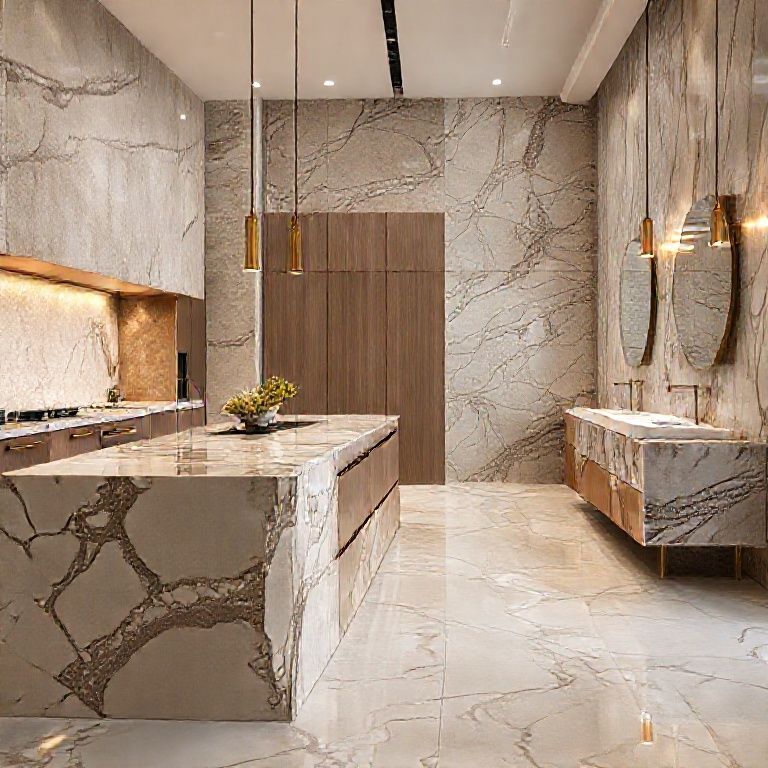
Stone Slabs: These are made from natural stone materials like granite, marble, or limestone. Stone slabs are prized for their aesthetic appeal and longevity.
Metal Slabs: Used in industrial settings, metal slabs can be made from materials like steel, aluminum, or copper. They are often employed in flooring, roofing, and structural elements.
Properties of Slabs
Durability: Slabs, particularly concrete and stone slabs, are known for their high durability and long lifespan. They can withstand significant loads and resist environmental factors like weathering and wear.
Aesthetics: Depending on the material used, slabs can offer a wide range of visual appeal. Natural stone slabs, for example, provide a timeless and elegant look, while concrete slabs can be finished in various textures and colors.
Cost: The cost of slabs can vary widely depending on the material and the complexity of the project. Concrete slabs are generally more affordable, while stone slabs can be significantly more expensive due to their natural origin.
Uses of Slabs
Flooring: Slabs are extensively used for flooring in both residential and commercial buildings. Concrete slabs provide a cost-effective and durable solution, while stone slabs offer a luxurious and timeless aesthetic.
Foundations: In construction, slabs serve as foundational elements, providing a stable base for structures. Concrete slabs are particularly effective in this role due to their strength and ability to distribute loads evenly.
Countertops: Slabs are also used to create countertops in kitchens and bathrooms. Stone slabs are popular for their beauty and durability, while concrete slabs can be customized to match specific design needs.
Roofing: In some industrial applications, metal slabs are used for roofing. They offer a durable and low-maintenance solution that can withstand harsh weather conditions.
Pathways and Patios: Slabs are ideal for creating pathways, patios, and outdoor living spaces. They provide a durable and attractive surface that can withstand foot traffic and weather elements.
Conclusion
Understanding the basics of kaolinite and slabs helps in appreciating their unique properties and applications. Kaolinite, with its chemical stability and versatile industrial uses, plays a crucial role in ceramics, paper manufacturing, cosmetics, pharmaceuticals, and adsorbents. On the other hand, slabs offer a range of options from concrete to stone and metal, providing durability, aesthetic appeal, and cost-effectiveness for construction and industrial applications. In the next part, we will delve deeper into the specific applications, advantages, and limitations of each material to further differentiate between kaolinite and slabs.
Detailed Applications and Comparisons
In the second part of this comprehensive exploration, we will dive deeper into the specific applications, advantages, and limitations of kaolinite and slabs. This will provide a more nuanced understanding of how each material excels in different scenarios and where they may overlap or diverge in their uses.
Kaolinite: Expanding Its Horizons
While kaolinite’s primary applications are well-known, its versatility allows it to be adapted to an array of modern uses. Here, we explore some advanced applications and compare them to traditional uses.
Advanced Applications of Kaolinite
Environmental Remediation: Kaolinite’s adsorption properties make it an excellent candidate for environmental remediation. It is used to remove contaminants from soil and water, making it invaluable in clean-up operations for industrial sites and polluted areas.
Pharmaceutical Excipients: Beyond its basic role, kaolinite is used in the formulation of controlled-release drug delivery systems. Its stability and inertness make it a preferred choice for encapsulating active pharmaceutical ingredients.
Food Industry: Kaolinite is used as a food additive to improve the texture and stability of certain food products. It acts as a thickening agent and helps in maintaining the consistency of foods like sauces, dressings, and confections.
Oil Drilling: In the oil and gas industry, kaolinite is used as a drilling mud additive. Its ability to absorb water and reduce viscosity helps in creating a stable drilling fluid, which is essential for efficient and safe drilling operations.
Advantages of Kaolinite
Chemical Stability: Kaolinite’s chemical stability makes it resistant to high temperatures and various chemical reactions, making it suitable for high-stress environments.
Low Toxicity: Kaolinite is generally considered non-toxic, which makes it safe for use in applications where human contact is likely, such as in cosmetics and food products.
Availability: Being one of the most abundant clay minerals, kaolinite is readily available, which ensures a steady supply for various industries.
Limitations of Kaolinite
Plasticity: While kaolinite’s low plasticity is an advantage in some applications, it can be a limitation in others where a higher degree of malleability is required.
Processing Requirements: Kaolinite often requires specific processing techniques to achieve the desired properties, which can add to the cost and complexity of its use.
Slabs: Versatility in Construction and Beyond
Slabs, as a broad category, offer a wide range of applications that cater to various construction needs and beyond. Here, we explore some advanced and traditional uses to highlight their versatility.
Advanced Applications of Slabs
Green Building Materials: In modern construction, slabs are increasingly being used in sustainable building practices. For example, green roofs often utilize stone or concrete slabs to provide insulation, reduce urban heat, and manage stormwater.
Smart Technology Integration: Slabs are being integrated with smart technologies in modern buildings. For instance, concrete slabs can be embedded with sensors and conductive materials to create smart pavements that monitor traffic patterns and environmental conditions.
Architectural Innovations: Advanced architectural designs often employ slabs in innovative ways. For example, glass-fiber reinforced slabs are used to create lightweight, high-strength structures that offer both durability and aesthetic appeal.
Advantages of Slabs
Durability and Strength: Slabs, particularly concrete and stone slabs, offer exceptional durability and strength, making them ideal for heavy-duty applications.
Customizability: Depending on the material, slabs can be customized to achieve various finishes, colors, and textures, allowing for unique and personalized design solutions.
碳酸钙在不同领域的应用
建筑材料 石灰石和大理石: 碳酸钙是石灰石和大理石的主要成分,这些材料常用于建筑和装饰。石灰石和大理石在建筑中被用于建造墙体、地板和雕塑。 水泥: 碳酸钙是制造水泥的重要成分之一。水泥是建筑业中非常重要的材料,用于混凝土和砖的生产。 医药和营养补充 钙补充剂: 碳酸钙是市面上最常见的钙补充剂之一。
它被广泛用于预防和治疗骨质疏松症等钙缺乏症状。 药物: 碳酸钙也被用作抗酸药,可以缓解胃酸过多引起的不适。 食品工业 增稠剂和稳定剂: 碳酸钙在食品工业中被用作增稠剂和稳定剂,帮助改善食品的质地和口感。 食品添加剂: 作为一种食品添加剂,碳酸钙常用于蛋糕、酱料、乳制品等食品中,以提高钙含量。
农业 土壤改良剂: 碳酸钙被用作土壤改良剂,可以调节土壤的pH值,改善土壤结构,从而提高农作物的产量。 化工和制造业 化学原料: 碳酸钙在化工业中被用作各种化学反应的原料,如制备碳酸钠和碳酸氢钠。 填充剂: 在塑料、橡胶和纸张等制造业中,碳酸钙常被用作填充剂,以增加材料的强度和刚性。
碳酸钙的优缺点
优点
丰富且廉价: 碳酸钙在自然界中非常丰富,成本相对较低,因此可以大规模生产和使用。 生物相容性: 对人体和环境友好,特别是在医药和食品领域,被广泛接受。 多用途: 可以应用于建筑、医药、食品、农业等多个领域,具有广泛的市场需求。
缺点
溶解性: 碳酸钙在水中的溶解度非常低,这在一些应用中可能会限制其效果。例如,在需要高效钙吸收的补充剂中,可能需要其他形式的钙。 处理和加工: 在某些工业应用中,需要对碳酸钙进行处理和加工,这可能增加生产成本和复杂性。 环境影响: 在大规模开采和使用过程中,可能对环境造成一定影响,如扰动土壤和水体。
通过了解碳酸钙的应用和其优缺点,我们可以更好地利用这一资源,同时也要注意在使用过程中的环境保护和资源管理。