Choosing Between Synthetic Stone and Marble for Your Laundry Room Vanity
When it comes to designing a functional and aesthetically pleasing laundry room, the choice of materials for your vanity plays a crucial role. Two popular options that often come up in discussions are synthetic stone and marble. Both materials offer distinct advantages and drawbacks, making it essential to weigh them carefully before making a decision. This first part of our article will delve into the characteristics, benefits, and considerations of synthetic stone versus marble.
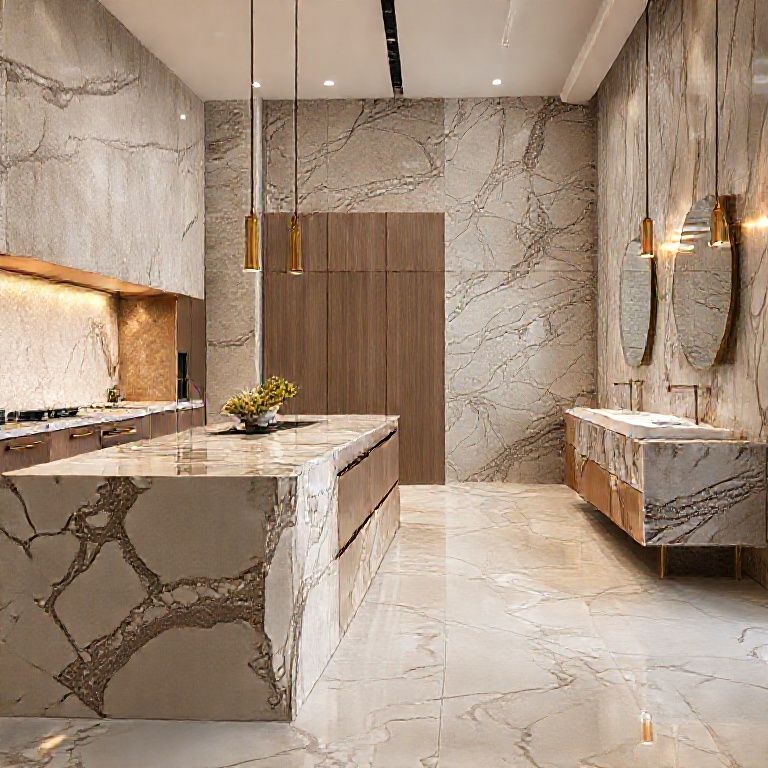
Understanding Synthetic Stone
Synthetic stone is a composite material made from a combination of natural stone powder, resin, and other additives. It is designed to mimic the look of natural stone while offering a range of benefits that often surpass traditional materials.
Benefits of Synthetic Stone:
Durability and Strength: Synthetic stone is highly durable and resistant to scratches, chips, and stains. This makes it an excellent choice for a high-traffic area like a laundry room where daily use can cause wear and tear. Water Resistance: Unlike natural stone, synthetic stone is entirely waterproof. This characteristic ensures that spills and splashes, which are common in a laundry room, won’t seep into the material, causing damage. Cost-Effective: One of the most significant advantages of synthetic stone is its affordability. It generally costs less than natural stone, making it an accessible option for many homeowners. Variety of Colors and Designs: Synthetic stone is available in a vast array of colors and patterns, allowing for extensive customization. You can choose a design that closely resembles natural stone or opt for unique, creative patterns that stand out. Ease of Maintenance: Cleaning synthetic stone is straightforward. A simple wipe-down with a damp cloth and mild detergent is usually sufficient to maintain its pristine look.
Understanding Marble
Marble is a natural stone formed from the metamorphism of limestone. It is prized for its beautiful, veined patterns and luxurious appearance.
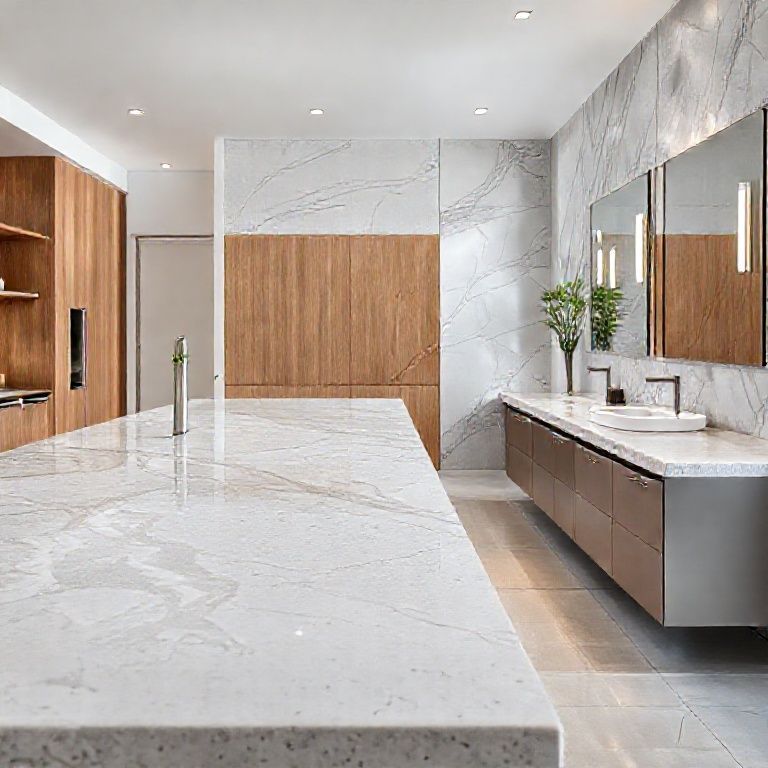
Benefits of Marble:
Aesthetic Appeal: Marble’s natural beauty and elegance make it a popular choice for high-end homes. Its unique veining and colors can add a touch of sophistication to any space. Heat Resistance: Marble is naturally heat-resistant, making it suitable for areas where hot water and steam might be encountered. This feature makes it a good choice for a laundry room with a steam cleaner. Durability: While marble is less prone to scratches than some other natural stones, it is still susceptible to staining and chipping. However, high-quality marble can last for decades with proper maintenance. Environmental and Ethical Considerations: For environmentally conscious consumers, marble offers a natural stone option that, when sourced responsibly, has a lower carbon footprint compared to synthetic alternatives.
Comparing Synthetic Stone and Marble
When comparing synthetic stone and marble, several key factors come into play: durability, cost, maintenance, and aesthetics.
Durability:
Synthetic stone generally has the edge in durability. It is less likely to chip, crack, or stain compared to marble, which can be susceptible to acid-based stains and needs regular sealing to maintain its surface.
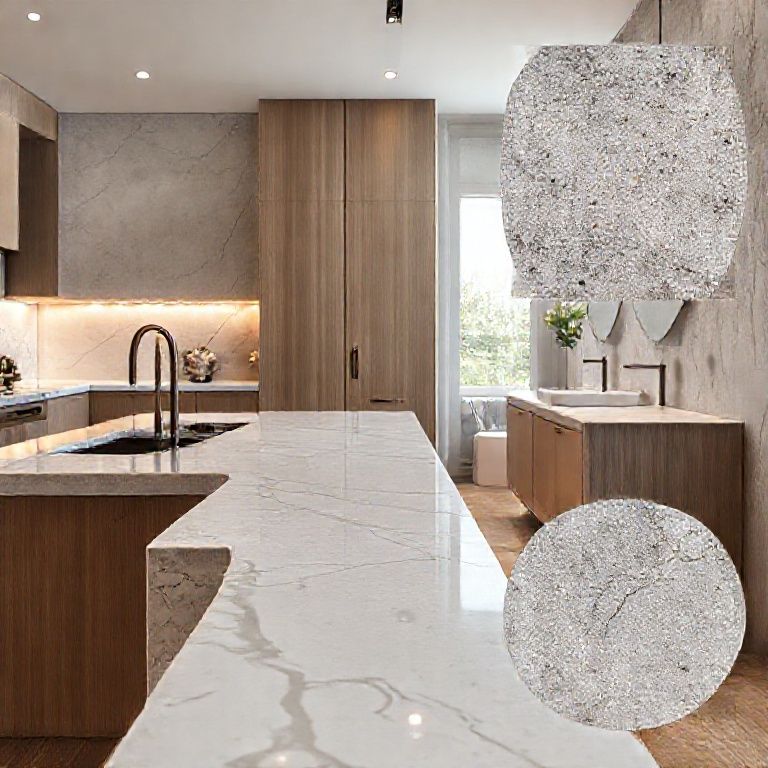
Cost:
Synthetic stone is typically more affordable than marble. The cost difference can be substantial, especially for custom designs or large installations.
Maintenance:
Synthetic stone is easier to maintain. It doesn’t require sealing or special treatments to protect against stains, unlike marble, which often needs regular sealing and care to maintain its appearance.
Aesthetics:
Both materials offer stunning visual appeal, but marble’s natural veining and textures provide a unique, one-of-a-kind look that synthetic stone can emulate but never perfectly replicate.
Conclusion
Choosing between synthetic stone and marble for your laundry room vanity involves considering your budget, maintenance preferences, and aesthetic desires. Synthetic stone offers unmatched durability, affordability, and ease of maintenance, making it a practical choice for high-traffic areas. Marble, on the other hand, provides unparalleled beauty and elegance, perfect for those who prioritize natural aesthetics and are willing to invest in a more costly, maintenance-intensive material.
In the next part of this article, we will delve deeper into specific use cases, installation considerations, and expert recommendations to help you make the best choice for your laundry room vanity.
Choosing Between Synthetic Stone and Marble for Your Laundry Room Vanity
Continuing from where we left off, this second part will explore the practical aspects of using synthetic stone and marble in your laundry room vanity. We’ll discuss specific use cases, installation considerations, and expert recommendations to help you make a well-informed decision based on your unique needs and preferences.
Specific Use Cases
Synthetic Stone in High-Traffic Areas
Synthetic stone is particularly well-suited for areas that experience heavy use and exposure to water. Here are some specific scenarios where synthetic stone excels:
Daily Laundry Tasks: In a high-traffic laundry room, synthetic stone’s durability makes it an excellent choice. It can withstand daily spills, splashes, and wear without showing signs of damage, ensuring your vanity remains in pristine condition. Commercial Laundries: For commercial laundries, synthetic stone is often the preferred material due to its high resistance to stains and water damage. It’s practical, cost-effective, and easy to maintain, making it ideal for environments with frequent use. Home Offices with Laundry Facilities: If your laundry room also doubles as a home office, synthetic stone’s stain resistance and durability provide peace of mind, knowing that the vanity will endure both daily work tasks and laundry duties.
Marble in Elegant Settings
Marble’s natural beauty and elegance make it ideal for settings where aesthetics are paramount. Here are some scenarios where marble shines:
Laundry Rooms with Design Focus: For those looking to create a luxurious and sophisticated laundry room, marble’s unique veining and colors can add a touch of elegance. It’s perfect for homes where design and aesthetics are a top priority. Homes with Traditional Architectural Styles: In homes with traditional or classic architectural styles, marble’s timeless beauty can complement the overall design aesthetic, providing a sense of luxury and refinement. Showrooms and Demo Spaces: For showrooms or demonstration spaces where the goal is to showcase the beauty of different materials, marble’s stunning appearance makes it an excellent choice to impress visitors and clients.
Installation Considerations
When installing synthetic stone or marble, several factors come into play, including the type of installation, the skill level required, and the potential for future repairs.
Synthetic Stone:
Installation Process: Synthetic stone can be installed in various ways, including adhesive bonding, mechanical fixing, or even direct casting. The installation process is generally straightforward, and professional help is often not required for smaller projects. Skill Level Required: For those with some DIY experience, installing synthetic stone can be a manageable project. However, for large or complex installations, it might be wise to hire a professional to ensure a seamless finish. Future Repairs: Repairs on synthetic stone are relatively simple. If a chip or scratch occurs, it can often be fixed with a touch-up kit, making it a more practical choice for areas prone to wear and tear.
Marble:
Installation Process: Marble installation typically requires professional expertise due to its weight and the need for precise cutting and fitting. The installation process can be complex and time-consuming. Skill Level Required: Professional installation is often necessary to achieve a flawless finish. If you’re planning to install marble yourself, it’s crucial to have the right tools and skills, or risk damaging the material. Future Repairs: Repairing marble can be challenging. If the surface is scratched or stained, it might require professional resurfacing or even complete replacement of the affected area. This can be costly and may not always restore the material to its original condition.
Expert Recommendations
To help you make the best choice for your laundry room vanity, here are some expert recommendations based on different scenarios:
For Budget-Conscious Homeowners: If cost is a significant concern, synthetic stone is the clear winner. It offers excellent durability and resistance to stains and water damage at a fraction of the price of marble. For Design-Focused Homeowners: If aesthetics and design are your top priorities, marble’s natural beauty and elegance can elevate the look of your laundry room. However, be prepared for higher costs and more intensive maintenance. For Commercial Spaces: In commercial settings where durability and low maintenance are crucial, synthetic stone is often the preferred choice. It’s practical, cost-effective, and easy to maintain, ensuring your laundry room remains functional and pristine.
当然,我们可以继续探讨和比较这两种材料在实际应用中的表现。在这一部分中,我们将讨论其耐久性、环保性、以及对家庭整体设计的影响。
耐久性
耐用性对比
Synthetic Stone (人造石): 耐刮擦: 人造石的耐刮擦性非常高,即使是尖锐的物品也不会轻易划伤表面。 抗冲击: 它对冲击和碰撞的耐受性也非常好,适合经常使用的地方。 抗污性: 由于其防水特性,人造石在面对水和化学品时表现出色,不易染色。
Marble (大理石): 美观但脆弱: 虽然大理石具有独特的美学价值,但其本身却相对脆弱,容易被酸性液体和磨损所损害。虽然高品质大理石可以经过特殊处理以提高耐久性,但这种处理通常会增加成本。
环保性
材料来源和生产过程
Synthetic Stone (人造石): 环保: 由于人造石是通过人工合成而成,它的生产过程相对环保。其原材料通常是天然石材粉末,但整个过程更加可控,能够减少对自然资源的直接开采。 二次利用: 因为人造石可以再生和回收利用,它的环境影响较小。
Marble (大理石): 资源消耗: 大理石的开采过程对环境有一定影响,特别是在大规模开采时。大理石的生产过程中也会产生大量的粉尘和废弃物,对环境有一定的污染。 不可再生: 大理石是一种不可再生的自然资源,其开采和使用会对自然界造成不可逆的影响。
对家庭整体设计的影响
风格和协调性
Synthetic Stone (人造石): 多样性: 由于人造石可以模仿各种天然石材的外观,它能够很好地与各种室内设计风格协调。无论是现代简约还是传统古典,人造石都能适应。 灵活性: 它可以根据设计需求进行定制,颜色和纹理都可以灵活调整。
Marble (大理石): 高贵典雅: 大理石因其天然的美丽纹理和光泽,常常被用于高端、高档的设计中,带来一种高贵典雅的氛围。 限制性: 由于其天然的美学特点,大理石的选择在某些情况下会受到限制。如果设计风格较为独特或创新,大理石可能不是最佳选择。
总结
在选择人造石还是大理石时,需要综合考虑预算、耐用性、环保性以及对整体家居设计风格的影响。如果您追求高质量、耐用且美观的材料,并且预算充足,大理石可能是最佳选择。而如果您更注重性价比、环保和灵活性,人造石则会是一个更好的选择。无论选择哪种材料,都应根据具体的使用环境和个人需求来做出最适合的决策。