Understanding the Basics of Marble Pricing
Introduction: Marble, a timeless and elegant choice for flooring, countertops, and walls, is highly prized for its natural beauty and durability. However, the cost of marble can vary significantly depending on various factors. To help you navigate this intricate process, this first part will focus on the fundamental aspects of calculating the price of marble per square meter, breaking down everything from material costs to the role of quality and design considerations.

Material Cost: The Core of Marble Pricing When calculating the price of marble per square meter, the material cost stands as the primary factor. Marble comes in various types, each with its unique set of characteristics and price points:
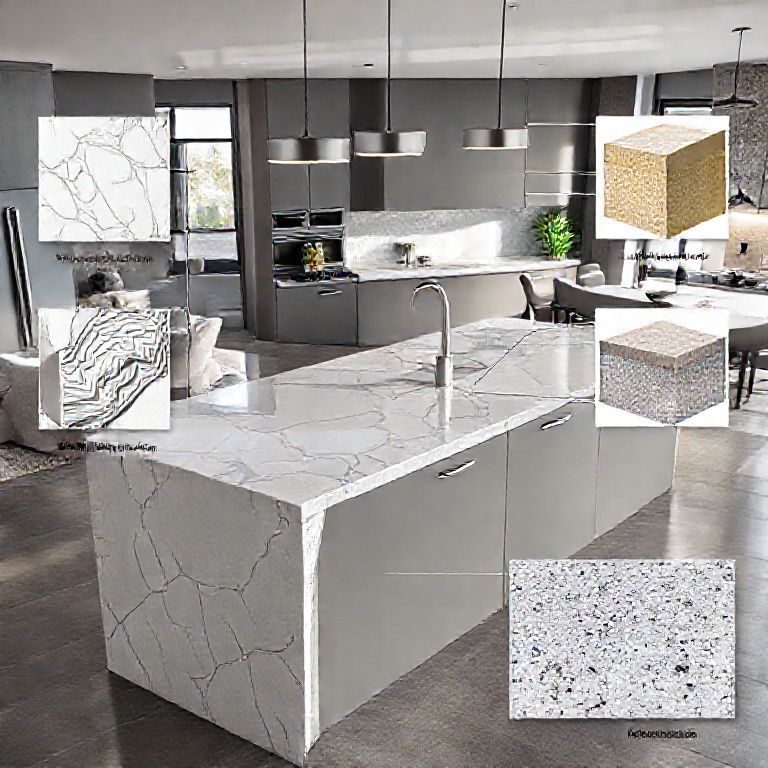
Types of Marble: Italian Marble: Known for its fine grain and beautiful colors, Italian marble often commands a higher price due to its superior quality. Turkish Marble: This variety is popular for its rich hues and affordability. Indian Marble: Known for its wide range of colors and patterns, Indian marble is another cost-effective option. Brazilian Marble: Famous for its unique veining and color variations, Brazilian marble is often used in high-end projects. Grade and Quality: Marble is graded based on its color, veining, and overall aesthetic appeal. Higher grades with more uniform coloring and fewer inclusions will naturally cost more. It’s essential to understand these grades to accurately assess the material cost.
Labor Costs: The Human Element While the material cost forms the foundation of marble pricing, labor costs are equally crucial. The complexity of marble installation can significantly influence the overall price per square meter.
Skilled Labor: The expertise of the labor force plays a vital role in the pricing. Skilled marble installers who have experience in handling delicate marble pieces and ensuring a flawless finish will charge more.
Installation Techniques: Different techniques, such as traditional methods versus modern adhesive systems, will impact labor costs. Traditional methods often require more hands-on work, thus increasing the price.
Additional Costs: Beyond Material and Labor Several other factors can affect the final cost of marble per square meter:
Transportation Costs: The distance from where the marble is sourced to your project site can affect transportation costs. Marble is heavy and often requires special handling, making logistics a significant consideration.
Customization and Design: Custom cuts, intricate designs, and special finishes like polishing or sealing can add to the overall cost. Unique designs and custom cuts require additional time and expertise, thus driving up the price.
Waste and Scraps: During installation, some marble will inevitably be cut or broken. The cost of waste management and the need for additional material must be factored into the overall pricing.
Conclusion: Understanding the basics of marble pricing involves a detailed look at material costs, labor charges, and additional expenses. Knowing these elements will help you make informed decisions and ensure that you get the best value for your investment. In the next part, we will delve deeper into how to calculate these costs accurately and what to consider when budgeting for your marble project.
Detailed Calculation Guide for Marble Pricing
Introduction: Now that we’ve covered the fundamental aspects of marble pricing, it’s time to dive into the detailed calculation process. Accurately determining the cost of marble per square meter requires careful consideration of various elements, including material costs, labor costs, and additional expenses. This second part will provide a step-by-step guide to help you accurately calculate the price of marble for your project.
Step 1: Determine the Material Cost per Square Meter Calculating the material cost is the first step in determining the overall price of marble per square meter. Here’s how to do it:
Select the Marble Type and Grade: Choose the type and grade of marble you wish to use. Use reputable suppliers to get accurate pricing for different types and grades.
Calculate the Total Area: Measure the total area where the marble will be installed. This can be done by multiplying the length and width of the space in square meters.
Find the Price per Kilogram: Obtain the price per kilogram for the chosen marble type and grade from the supplier. Marble is typically sold by weight.
Calculate the Weight per Square Meter: Different marbles have different weights per square meter. For instance, a typical marble slab might weigh around 3 to 4 kilograms per square meter.
Compute the Material Cost: Multiply the total area by the weight per square meter and then by the price per kilogram to get the total material cost.
Example Calculation: Let’s say you’re using a high-grade Italian marble slab that costs $50 per kilogram and weighs 3.5 kilograms per square meter for a 20 square meter project:
Total area = 20 sqm Weight per square meter = 3.5 kg Price per kilogram = $50
Total material cost = 20 sqm * 3.5 kg/sqm * $50/kg = $3,500
Step 2: Calculate Labor Costs Labor costs can vary widely based on the complexity of the installation, so it’s important to get accurate estimates from professionals.
Get Quotes from Multiple Installers: Obtain quotes from several reputable marble installers. Ensure they provide detailed breakdowns of labor costs.
Consider Installation Complexity: Factor in the complexity of the installation. For example, intricate designs or multiple types of marble used in one project will require more time and expertise.
Estimate Hours Required: Based on the project size and complexity, estimate the total number of hours required for installation. Multiply this by the installer’s hourly rate to get the labor cost.
Example Calculation: Assume the project requires 100 hours of labor and the installer charges $50 per hour:
Total labor cost = 100 hours * $50/hour = $5,000
Step 3: Include Additional Costs Don’t forget to account for additional costs that can impact the overall price per square meter.
Transportation Costs: If the marble needs to be transported long distances, add the transportation cost to your total estimate.
Customization and Design Fees: If your project requires custom cuts or special designs, add these costs to your estimate.
Waste and Scraps: Factor in the cost of any waste or scraps that will occur during installation. A common estimate is around 10% of the total material cost.
Example Calculation: Adding transportation costs of $200, customization fees of $500, and a 10% waste allowance on the material cost:
Total additional costs = $200 (transportation) + $500 (customization) + 10% of $3,500 (material cost) = $200 + $500 + $350 = $1,050
Step 4: Summarize Your Total Costs Finally, sum up all the calculated costs to get the total price per square meter of marble.
Total cost per square meter = Material cost + Labor cost + Additional costs
Using the previous examples:
Total cost per square meter = $3,500 (material) + $5,000 (labor) + $1,050 (additional) = $9,550
Since this is for a 20 square meter project, the final total cost would be:
Final total cost = $9,550 / 20 sqm = $477.50 per square meter
Conclusion: Accurately calculating the price of marble per square meter involves understanding and calculating material costs, labor costs, and additional expenses. By following this detailed guide, you can ensure a precise budget for your marble project, enabling you to make informed decisions and avoid unexpected costs. Whether you’re a homeowner or a contractor, this knowledge will help you navigate the world of marble pricing with confidence.