Understanding Synthetic Marble vs. Quartz
In today’s world of home and commercial design, the choice between synthetic marble and quartz can be quite perplexing. Both materials have risen in popularity due to their aesthetic appeal and durability, but they also come with significant differences in price, quality, and maintenance. Here, we’ll explore these aspects in detail to help you make an informed decision.

The Production Process
Synthetic Marble: Synthetic marble is created by combining various minerals such as calcite, aragonite, and dolomite with resins, fillers, and pigments. This mixture is then heated and pressed under high pressure to form a solid material that mimics the appearance of natural marble. The production process involves several stages, including:
Mixing: Mineral powders are mixed with a polymer resin. Molding: The mixture is poured into molds and subjected to high pressure and temperatures. Curing: The material is allowed to cure, which enhances its strength and durability.
Quartz: Quartz, on the other hand, is a composite material made from 93% natural quartz crystals and 7% resin. The production process is as follows:
Mixing: High-purity quartz powder is combined with polymer resin. Molding: The mixture is poured into molds and subjected to high pressure and temperature. Curing: The material undergoes a curing process to achieve its final form and properties.
Aesthetic Appeal
Both synthetic marble and quartz offer a stunning range of colors and patterns, making them popular choices for countertops, sinks, and other surfaces. However, quartz generally offers a higher degree of uniformity and precision in color and pattern replication due to the use of natural quartz crystals.
Synthetic Marble: While synthetic marble can mimic the look of natural marble with impressive accuracy, it often lacks the unique veining and color variations found in true marble. It’s important to note that synthetic marble tends to have a more homogeneous appearance.
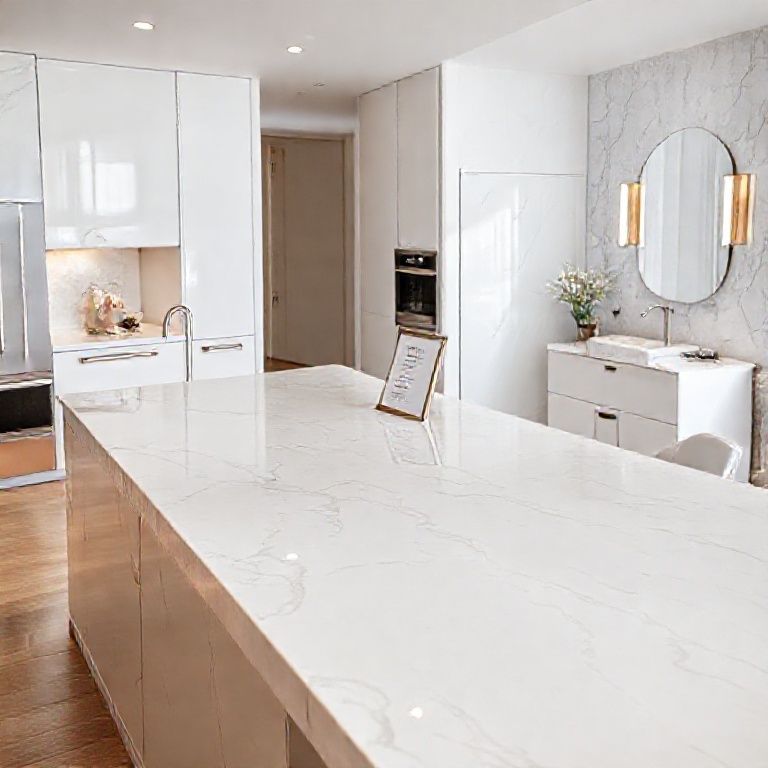
Quartz: Quartz provides a level of detail and uniformity that is often difficult to achieve with synthetic marble. The use of real quartz crystals ensures a natural look with consistent and intricate veining patterns.
Durability and Maintenance
Durability and ease of maintenance are crucial factors to consider when choosing between synthetic marble and quartz.
Synthetic Marble:
Scratch Resistance: Synthetic marble is generally more resistant to scratches compared to natural marble. However, it can still be susceptible to scratches and impacts if not properly maintained. Chemical Resistance: While synthetic marble is resistant to most household chemicals, it can be damaged by acidic substances like lemon juice or vinegar. Maintenance: Synthetic marble requires regular cleaning with mild soap and water. It should be sealed periodically to maintain its surface protection.
Quartz:
Scratch Resistance: Quartz is incredibly scratch-resistant and highly durable. It ranks a 7 on the Mohs scale of hardness, making it one of the hardest materials available for countertops. Chemical Resistance: Quartz is highly resistant to stains, chemicals, and scratches, making it an excellent choice for high-traffic areas. Maintenance: Quartz requires minimal maintenance. It only needs to be cleaned with mild soap and water and can be wiped with a damp cloth to keep it looking pristine.
Price Difference
The cost of synthetic marble and quartz can vary significantly based on the quality, design, and manufacturing process. Let’s break down the price differences:
Synthetic Marble:
Cost Range: Typically, synthetic marble ranges from $25 to $45 per square foot. The price can vary based on the complexity of the design and the quality of the materials used. Factors Affecting Cost: The cost is influenced by the design intricacy, color, and the manufacturer’s expertise. Higher-end synthetic marbles with intricate veining and colors can command a higher price.
Quartz:
Cost Range: Quartz generally ranges from $40 to $70 per square foot. High-end quartz with unique patterns and colors can exceed this price range. Factors Affecting Cost: The cost of quartz is primarily influenced by the quality and uniqueness of the design, as well as the brand and manufacturer. Custom designs and intricate patterns can significantly increase the price.
Overall Value
When evaluating the overall value of synthetic marble versus quartz, several factors come into play:
Synthetic Marble:
Aesthetic Appeal: Offers a realistic look that can be appealing to those who desire the appearance of natural marble at a lower cost. Cost-Effectiveness: More affordable than quartz, making it an excellent option for those on a budget. Maintenance: Requires regular maintenance to ensure the longevity of its surface, which may be a downside for some homeowners.
Quartz:
Durability: Exceptional durability and scratch resistance make quartz an excellent choice for long-term use. Low Maintenance: Requires minimal upkeep, making it an ideal option for busy households. Investment Value: While more expensive upfront, the durability and low maintenance make quartz a sound investment in the long run.
In conclusion, the choice between synthetic marble and quartz boils down to personal preferences and priorities. Synthetic marble offers an affordable, aesthetically pleasing option, while quartz provides unmatched durability and low maintenance. The next part of this article will delve deeper into specific use cases and additional considerations to help you make an informed decision.
Specific Use Cases and Additional Considerations
In the previous section, we explored the fundamental differences between synthetic marble and quartz in terms of production, aesthetic appeal, durability, maintenance, and overall value. Now, let’s delve deeper into specific use cases, additional considerations, and how to make the best choice for your needs.
Specific Use Cases
Synthetic Marble:
Interior Design: Synthetic marble is an excellent choice for interior design where a natural marble look is desired without the higher cost and maintenance requirements of real marble. It’s commonly used in:
Countertops: Offers a sophisticated look for kitchen and bathroom countertops.
Backsplashes: Provides a marble-like texture and color without the upkeep of natural marble.
Vanity Tops: Ideal for bathroom vanities, providing a sleek and elegant appearance.
Commercial Spaces: In commercial settings, synthetic marble is used where a high-quality, cost-effective material is needed. It’s suitable for:
Office Desks: Provides a durable, easy-to-clean surface for office desks.
Showrooms: Offers an upscale appearance for showroom displays.
Retail Spaces: Enhances the aesthetic appeal of retail environments without the higher maintenance of natural marble.
Quartz:
Kitchens and Bathrooms: Quartz’s durability and resistance to stains and scratches make it an ideal choice for countertops, backsplashes, and vanities. It’s:
Easy to Clean: Minimal maintenance required, making it perfect for high-traffic areas like kitchens and bathrooms.
Stain Resistant: Withstands spills and stains, preserving its appearance over time.
Commercial Applications: In commercial settings, quartz is used for its durability and aesthetic appeal. It’s ideal for:
Hospitality: Restaurants, cafes, and hotels benefit from quartz’s easy-to-clean surfaces.
Retail Stores: Provides a high-end look for retail displays and counters.
Offices: Durable and easy-to-maintain surfaces for office desks and reception areas.
Additional Considerations
When choosing between synthetic marble and quartz, several additional factors come into play:
Color and Design:
Synthetic Marble: Offers a range of colors and patterns, but may lack the unique veining and texture of natural marble. Custom designs can be created but may increase the cost. Quartz: Provides highly realistic veining and patterns due to the use of natural quartz crystals. Custom designs and unique patterns are often available at a premium price.
Environmental Impact:
Synthetic Marble: Manufacturing synthetic marble involves the use of resins and other chemicals, which can have environmental implications. However, it typically uses less energy compared to the quarrying and transportation processes involved in natural marble. Quartz: The production process for quartz is generally more environmentally friendly, as it involves fewer chemicals and less energy consumption compared to synthetic marble production.
Cost Over Time:
Synthetic Marble: While initially cheaper, synthetic marble may require more frequent sealing and maintenance, which can add to long-term costs. Quartz: The initial higher cost of quartz is offset by its durability and low maintenance requirements, making it a more cost-effective choice over time.
Brand Reputation:
Synthetic Marble: Many reputable manufacturers produce high-quality synthetic marble, but it’s essential to research brands and read reviews to ensure the product meets your expectations. Quartz: Leading brands in quartz manufacturing offer high-quality, durable products with excellent warranties and customer service.
Makingthe Best Choice
When it comes to choosing between synthetic marble and quartz, the decision often hinges on specific project requirements, budget constraints, and personal preferences. Here’s how to make an informed choice:
1. Define Your Needs:
Aesthetics: If you’re looking for an authentic marble look with a more budget-friendly option, synthetic marble could be a great choice. However, if you desire a material that offers the highest degree of realism with natural quartz veins, quartz is superior. Durability: If your space sees a lot of traffic or has high-moisture environments, quartz’s superior scratch resistance and stain resistance make it the better choice. Synthetic marble, while durable, can still be prone to scratches and impacts over time. Maintenance: Consider how much time you’re willing to spend on cleaning and maintaining the surface. Quartz requires minimal maintenance, while synthetic marble will need periodic sealing to maintain its appearance and protection.
2. Budget Considerations:
Initial Cost: Quartz generally has a higher upfront cost compared to synthetic marble. However, this initial investment is often offset by the material’s long-term durability and reduced maintenance requirements. Long-Term Savings: While synthetic marble might be cheaper to install, its need for periodic sealing and potential for damage can lead to higher long-term costs. Quartz’s durability means fewer repairs and less need for maintenance, resulting in cost savings over time.
3. Project Scope:
Small Projects: For smaller projects like kitchen backsplashes or bathroom vanities, synthetic marble might be sufficient if budget is a primary concern. It provides a realistic marble look at a lower cost. Large Projects: For larger projects, such as entire countertops or extensive commercial installations, quartz’s durability and aesthetic appeal make it a better choice. The long-term savings and reduced maintenance associated with quartz often make it the more economical option.
4. Environmental Impact:
Sustainability: Both materials have environmental implications, but quartz typically scores better in terms of sustainability due to its lower chemical use and energy consumption during production. However, it’s important to consider the entire lifecycle of the material, including transportation and disposal.
5. Warranty and Guarantees:
Synthetic Marble: Many manufacturers offer warranties on their synthetic marble products, but these often cover appearance and durability issues. It’s important to review the warranty details to ensure it meets your needs. Quartz: Leading brands provide comprehensive warranties that often cover scratches, chips, and stains. These warranties are a significant advantage when considering the long-term value of the material.
Final Thoughts
In summary, the choice between synthetic marble and quartz largely depends on your specific needs, budget, and priorities. Synthetic marble offers a cost-effective, aesthetically pleasing alternative that mimics natural marble well, making it ideal for smaller projects or budget-conscious applications. Quartz, on the other hand, stands out for its superior durability, minimal maintenance, and realistic veining, making it perfect for high-traffic areas and large installations where long-term value and ease of upkeep are paramount.
By carefully considering these factors, you can make an informed decision that aligns with your design vision, functional requirements, and budget constraints, ensuring that your choice will serve you well for years to come. Whether you opt for synthetic marble or quartz, both materials offer unique advantages that can enhance the beauty and functionality of your space.