The Essence of Man-Made Stone vs. Quartz Countertops
In the realm of modern kitchen and bathroom design, the choice of countertop material is pivotal. Two of the most popular options today are man-made stone and quartz. Both materials offer distinct benefits and cater to different tastes and needs. Understanding the essence of these materials helps in making a well-informed decision.

What is Man-Made Stone?
Man-made stone, also known as cultured stone, is a composite material that mimics the appearance of natural stone. It is primarily made from a mixture of water, limestone, and polymer resins. This combination creates a stone-like texture and appearance that closely resembles natural stone.
Composition and Process
The creation of man-made stone begins with the meticulous layering of limestone and polymer resins. This mixture is then poured into molds and allowed to cure, forming a solid block that can be cut and shaped into countertop slabs. The curing process involves significant heat and pressure, ensuring the material achieves a solid and durable structure.
Benefits of Man-Made Stone
Durability: Man-made stone is known for its durability and resistance to scratches and chips. It doesn’t require sealing like natural stone, which makes it a low-maintenance option.
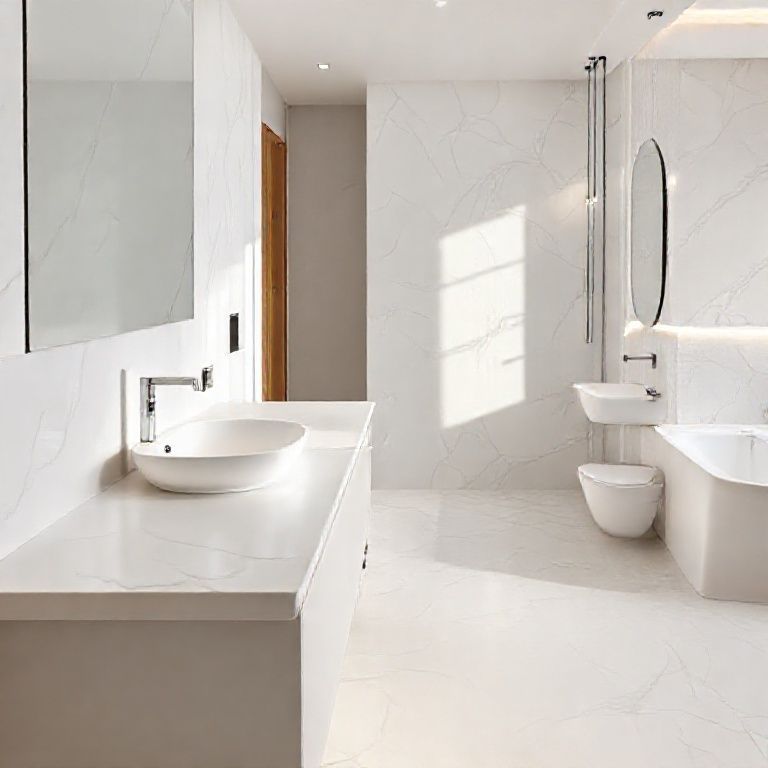
Affordability: Generally, man-made stone countertops are more affordable compared to natural stone alternatives. This makes them an attractive option for budget-conscious homeowners.
Customization: The material allows for a high degree of customization in terms of color, pattern, and design. It can mimic various natural stones, including marble and granite.
Ease of Installation: Due to its solid form, man-made stone slabs are easier to cut and install compared to natural stone.
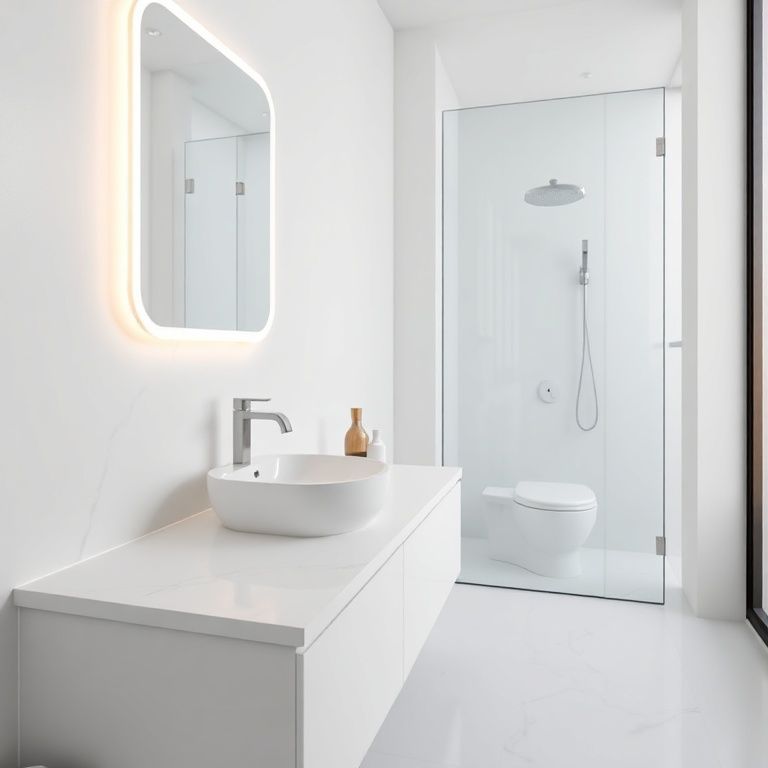
Considerations
While man-made stone offers many advantages, it does have some considerations:
Heat Resistance: Although durable, man-made stone can still be affected by extreme heat. It is recommended to avoid placing hot pots and pans directly on the surface.
Weight: Man-made stone slabs are heavier than quartz slabs, which can be a factor in installation and handling.
What is Quartz?
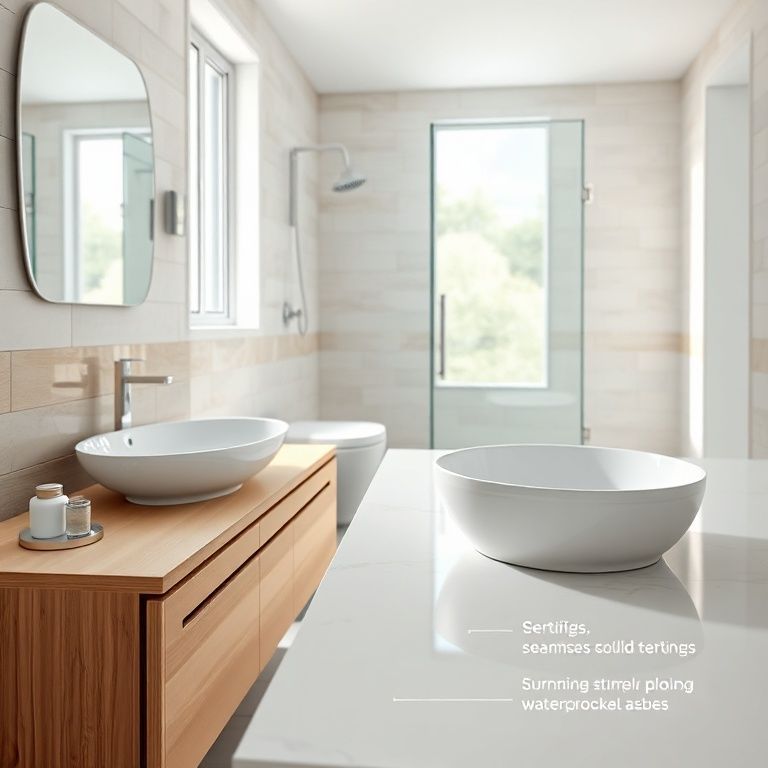
Quartz is a contemporary and highly popular choice for kitchen and bathroom countertops. It is made from 93% natural quartz and 7% resin, which binds the particles together to form a solid, durable surface.
Composition and Process
The manufacturing process for quartz involves mixing crushed quartz particles with a resin binder. This mixture is then poured into molds and subjected to high pressure and temperature. The result is a seamless, solid surface that is homogeneous in nature, free from any veins or inclusions.
Benefits of Quartz
Unmatched Durability: Quartz is renowned for its durability. It is highly resistant to scratches, stains, and heat, making it ideal for high-traffic areas like kitchens.
Low Maintenance: One of the standout features of quartz is its low maintenance. It does not require sealing, unlike natural stone, and can withstand everyday wear and tear.
Stain Resistance: The solid surface of quartz does not absorb liquids, making it highly resistant to stains and easy to clean.
Aesthetic Appeal: Quartz offers a vast range of colors and patterns, allowing for endless design possibilities. It can mimic the appearance of natural stone while providing the benefits of a more durable material.
Considerations
While quartz countertops offer numerous benefits, there are some considerations to keep in mind:
Cost: Quartz can be more expensive than man-made stone, particularly when opting for custom colors and patterns.
Installation: Although quartz is lightweight compared to man-made stone, professional installation is still recommended to ensure a flawless finish.
Heat Resistance: Despite its durability, quartz can still be affected by extremely high temperatures. It is advisable to avoid placing hot objects directly on the surface.
Conclusion
Both man-made stone and quartz countertops offer unique advantages and cater to different preferences and budgets. Man-made stone provides an affordable, customizable, and durable alternative to natural stone, while quartz offers unparalleled durability, low maintenance, and aesthetic versatility. Understanding these differences can help you make a well-informed decision that aligns with your design vision and lifestyle needs.
Making the Final Choice: Man-Made Stone vs. Quartz Countertops
Having explored the foundational characteristics of man-made stone and quartz countertops, we now delve deeper into the specifics to help you make an informed decision based on your unique requirements.
Factors to Consider When Choosing Between Man-Made Stone and Quartz
Budget
One of the most critical factors in choosing between man-made stone and quartz is budget.
Cost of Materials: Man-made stone generally falls at the lower end of the price spectrum, making it an attractive option for those on a budget. Quartz, on the other hand, is typically more expensive due to the high-quality materials and manufacturing process.
Installation Costs: While both materials require professional installation, the cost may vary slightly. Quartz installations might incur slightly higher costs due to the need for specialized tools and techniques.
Long-Term Value: While quartz may have a higher upfront cost, its durability and low maintenance could lead to long-term savings in terms of repairs and maintenance.
Durability and Maintenance
Durability and maintenance are significant considerations when selecting countertop materials.
Scratch and Stain Resistance: Quartz is superior in terms of scratch and stain resistance. Its solid surface is impervious to liquids and stains, making it ideal for busy kitchens. Man-made stone is also durable but may require more frequent maintenance compared to quartz, although it does not need sealing.
Heat Resistance: Both materials offer good heat resistance, but quartz generally holds up better under extreme heat. It’s crucial to avoid placing hot items directly on either surface to prevent potential damage.
Cleaning and Maintenance: Quartz countertops require minimal maintenance. They are easy to clean and do not require any sealing or special treatments. Man-made stone, while low-maintenance, may benefit from occasional cleaning with appropriate stone-safe cleaners.
Aesthetic Appeal and Customization
The visual appeal and the ability to customize the look of your countertops are essential factors in the decision-making process.
Color and Design: Quartz offers an extensive range of colors and patterns, allowing for truly unique designs. Man-made stone can also mimic various natural stones, but it may not match the exact veining and texture of natural stone as precisely as quartz.
Customization: Both materials offer high levels of customization, but quartz provides seamless, homogeneous surfaces that can be designed to perfection. Man-made stone slabs can be cut to specific sizes and shapes, but achieving a perfectly seamless look may require more effort.
Aesthetic Versatility: Quartz’s versatility in color and design makes it suitable for modern, minimalist, or even traditional designs. Man-made stone can also offer versatile designs but may have a more rustic or natural stone-like appearance.
Installation and Weight
Installation and the weight of the slabs are practical considerations that can impact the overall project.
Installation Process: Both man-made stone and quartz require professional installation to ensure a perfect fit and seamless look. Quartz installations might need specialized tools, but both materials are manageable for professional installers.
Weight: Man-made stone slabs are heavier than quartz, which can be a factor in installation and handling. Quartz, being lighter, is easier to work with and install, though professional installation is still recommended.
Environmental Impact
The environmental impact of the materials is increasingly becoming a significant consideration for many homeowners.
Sustainability: Man-made stone is often considered more environmentally friendly as it uses recycled materials and does not require the extraction of natural stone. Quartz, while also sustainable due to its non-toxic components, does involve the extraction and processing of natural quartz.
Emissions: Man-made stone typically has lower emissions compared to quartz due to its simpler manufacturing process. However, both materials are designed to be low in volatile organic compounds (VOCs).
Making the Final Choice
When deciding between man-made stone and quartz, it’s essential to weigh the factors that matter most to you. Here are some final pointers:
Prioritize Durability and Low Maintenance: If durability and low maintenance are your top priorities, quartz is likely the better choice. Its scratch, stain, and heat resistance make it ideal for high-traffic areas.
Seek Aesthetic Customization: If you desire extensive customization and a natural stone-like appearance, man-made stone offers the flexibility to achieve various designs and patterns.
Budget Considerations: If budget is a major concern, man-made stone provides a cost-effective alternative without sacrificing durability and aesthetic appeal.
Environmental Impact: If sustainability is a priority, man-made stone might offer a more environmentally friendly option due to its use of recycled materials and lower emissions.
设计和美观
无论是人造石还是石英石,都有非常广泛的设计选择。它们在美观和设计上的表现有所不同。
人造石
多样性:由于人造石是通过模具制作的,它可以模仿各种天然石材的外观,包括大理石、花岗岩和石灰岩。这使得设计师有很大的自由度,可以创造出非常独特的设计。
颜色和纹理:人造石可以制作出各种复杂的颜色和纹理,这些纹理可以通过调整模具和添加不同的颜料来实现。
石英石
一致性:石英石由于其高压烧结工艺,能够提供非常一致的外观和色彩。这意味着每一块石英石台面都几乎完全相同,不会有任何自然的纹理变化。
颜色选择:虽然石英石的颜色选择相对较少,但它们提供了从经典的中性色到现代的深色调的广泛选择。
耐用性和维护
耐用性和维护是选择台面材料时非常重要的考虑因素。
人造石
耐刮擦:人造石台面具有一定的耐刮擦性,但相比于石英石,它可能会在长时间的使用中出现磨损和划痕。
耐热性:虽然人造石有一定的耐热性,但它不如石英石。极端高温可能会导致人造石变形或损坏。
维护:人造石台面一般不需要特别的维护,只需用中性清洁剂和软布进行清洁即可。
石英石
耐刮擦和耐热性:石英石被广泛认为是最耐用的台面材料之一。它几乎不会出现划痕,也不会因为热量变形。石英石的硬度在Mohs硬度表上达到7,这意味着它非常耐用。
易于清洁:石英石的表面是光滑的,不吸收污渍和油脂,这使得清洁非常简单。只需用温和的清洁剂和水进行清洁即可。
成本
成本是选择台面材料时不可忽视的因素。
人造石
价格范围:人造石的价格通常在中等范围,但可以根据设计和材料的复杂性有所变化。通常,人造石比石英石便宜。
石英石
高成本:石英石由于其高压烧结工艺和高耐用性,其成本通常高于人造石。但考虑到其长久的耐用性和低维护成本,石英石可能在长期使用中更为经济。
环保性
环保性在现代建筑和装修中越来越受到重视。
人造石
再生材料:人造石通常使用回收的石材和其他材料,这使其在环保方面有一定优势。
石英石
低VOC排放:石英石在制造过程中使用的胶合剂和树脂通常具有低挥发性有机化合物(VOC)排放,这使其在空气质量方面更为环保。
结论
选择人造石还是石英石台面,最终取决于您的具体需求和偏好。
如果您重视设计的多样性和颜色选择,并且预算有限,人造石可能是更好的选择。
如果您更看重耐用性、维护简单和长期的经济性,石英石可能是更好的选择。
无论选择哪种材料,都应该在购买前仔细研究和咨询专业人士,以确保选择最适合您需求的材料。