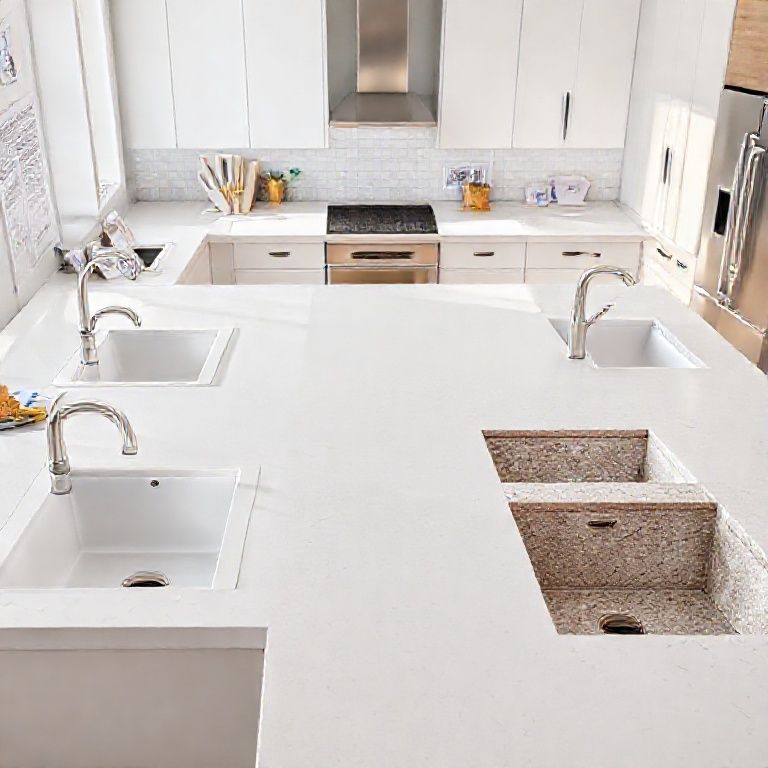
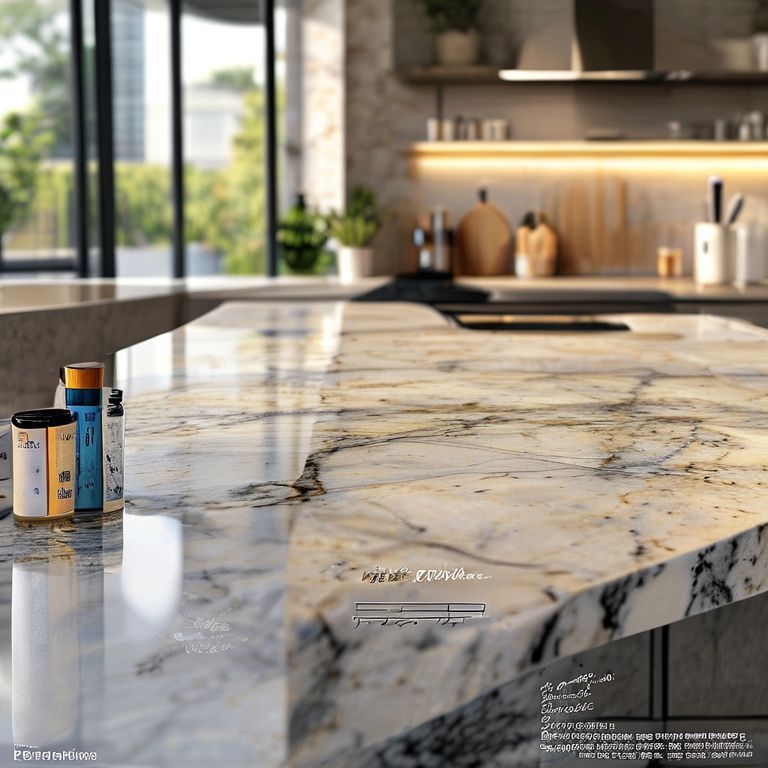
The modern kitchen has evolved from a mere utility room into the atmospheric heart of the home, a place where architecture meets appetite. In this pursuit of the “perfect” kitchen, homeowners and designers have become increasingly obsessed with the “Taizhong” style—or what we commonly refer to as the flush-mount sink. This installation method, where the rim of the sink sits perfectly level with the countertop, offers a visual continuity that is hard to beat. It’s sleek, it’s easy to wipe down, and it lacks the awkward “lip” of an overmount sink or the silicone-heavy maintenance of an undermount. But as we push the boundaries of minimalism, we often find ourselves staring at a slab of 1.5cm quartz stone and asking a very specific, slightly nervous question: “Can this thin, elegant piece of stone actually support a flush-mount sink?”

To answer this, we first have to appreciate why 1.5cm quartz has become such a darling of the design world. For years, the 2cm and 3cm slabs were the undisputed kings of the kitchen. They felt substantial, heavy, and “expensive.” However, the tides of taste have shifted toward the “thin-slab” aesthetic. A 1.5cm profile offers a razor-sharp, European-inspired look that makes a kitchen feel lighter and more agile. It fits perfectly within the contemporary “quiet luxury” trend, where the quality of the material speaks louder than its bulk. Quartz, being an engineered stone composed of roughly 90-94% crushed natural quartz and 6-10% polymer resins, is incredibly dense. This density allows it to be sliced thinner than many natural marbles or granites while maintaining impressive flexural strength.
However, the “Taizhong” or flush-mount sink presents a unique mechanical challenge for a 1.5cm slab. Unlike an overmount sink, which rests its weight on top of the stone, or an undermount sink, which hangs below it, a flush-mount sink requires the stone to be “rebated” or milled down. To achieve that seamless, level look, a professional fabricator must grind away a portion of the quartz’s thickness around the perimeter of the sink hole. If you start with a 1.5cm (15mm) slab and you need to create a 3mm to 5mm deep ledge for the sink rim to sit in, you are suddenly left with only 10mm to 12mm of stone at the most critical stress point of your countertop. This is where the debate begins.
From a purely technical standpoint, yes, it is possible. Modern CNC (Computer Numerical Control) machines are wonders of precision. They can carve out a ledge in a 1.5cm quartz slab with the accuracy of a surgeon. When the sink is dropped into that carved-out notch, the result is a breathtakingly smooth transition from stone to steel or granite composite. For a low-traffic kitchen or a homeowner who treats their space with the reverence of an art gallery, this setup works beautifully. The quartz is hard enough to resist the vibrations of a garbage disposal, and the resin binder provides enough “give” to prevent the stone from being as brittle as ceramic.
But we have to look at the reality of a working kitchen. A sink is not just a visual focal point; it’s a high-impact zone. Think about the weight of a 10-quart pasta pot filled with water, or the accidental thud of a heavy cast-iron skillet against the edge of the sink while you’re washing up. When you use a 1.5cm slab for a flush-mount installation, you are essentially asking a very thin ledge of stone to bear significant weight and absorb mechanical shocks. The margin for error is slim. In the world of stone fabrication, the thinner the material, the less “meat” there is to absorb the stresses of daily life. This doesn’t mean it can’t be done; it just means the conversation needs to move from “Can it be done?” to “How do we ensure it lasts?”
Design is often a game of compromises. If you are dead-set on the 1.5cm look, you are choosing a path that requires elite-level craftsmanship. You aren’t just buying a piece of stone; you are buying the skill of the person who measures, cuts, and reinforces it. The beauty of 1.5cm quartz lies in its defiance of gravity and bulk, but that defiance comes with a set of physical rules that cannot be ignored. In the next section, we will delve into the structural risks, the necessary reinforcements, and the final verdict on whether this combination is a stroke of genius or a recipe for a hairline crack.
When we move from the conceptual beauty of a 1.5cm quartz countertop to the practicalities of a flush-mount sink, we enter the realm of structural integrity. The primary concern with milling a 1.5cm slab is the “thinning” effect. When a fabricator creates that recessed ledge for the sink, they are effectively creating a weak point. If the milling isn’t perfectly uniform, or if the sink itself has a slight warp (which many stainless steel sinks do), the pressure points created when the sink is clamped or glued into place can cause the quartz to snap at the corners. This is why many traditional stone masons will instinctively push you toward a 2cm slab. That extra 5mm might not sound like much, but in the world of material physics, it represents a massive increase in load-bearing capacity and impact resistance.
However, if your heart is set on the 1.5cm profile, there are ways to mitigate these risks. The secret often lies beneath the stone. A professional installation of a 1.5cm flush-mount sink shouldn’t rely on the stone alone. It requires a robust sub-structure. Usually, this involves a high-quality plywood or moisture-resistant MDF “underlayment” that supports the entire span of the quartz. Around the sink cutout, experienced installers might use steel bracing or specialized “sink clips” that transfer the weight of a full sink directly to the cabinetry rather than letting it hang off the thinned-out quartz ledge. By creating a hidden support system, you allow the 1.5cm stone to be the “face” of the operation while the hidden infrastructure handles the heavy lifting.
Another factor to consider is the “radius” of your sink corners. Sharp, 90-degree angles are the natural enemies of stone. They act as “stress concentrators.” If your 1.5cm quartz slab is cut with sharp internal corners to accommodate a modern, square sink, the likelihood of a crack developing over time increases exponentially. Most experts suggest choosing a sink with slightly rounded corners—even a 10mm radius can make a world of difference—as this allows the CNC machine to create a smoother, stronger transition in the stone. It’s these small, technical details that determine whether your kitchen stays magazine-ready for a decade or ends up with a tragic crack six months after the renovation.
We also have to talk about the “glue” that holds it all together. In a flush-mount setup, the gap between the sink rim and the quartz ledge is filled with an epoxy or specialized silicone. This isn’t just for waterproofing; it acts as a buffer. In a 1.5cm installation, the precision of this seal is paramount. If the gap is too wide, it looks sloppy and collects grime. If it’s too tight, there’s no room for the natural expansion and contraction that happens when you pour boiling pasta water down the drain. Quartz is more stable than natural stone, but it still reacts to temperature. A 1.5cm slab has less mass to dissipate that heat, making the quality of the adhesive and the skill of the caulking line a vital part of the sink’s structural health.
So, what is the final verdict? Can 1.5cm quartz do a flush-mount sink? The answer is a qualified “Yes.” You can achieve that ultra-modern, seamless look, but you have to go into it with your eyes open. If you are a high-volume cook who frequently handles heavy Dutch ovens and giant stockpots, you might find the 1.5cm setup a bit too fragile for comfort. In that case, you could consider a “built-up” edge, where the stone looks like 1.5cm at the sink but is actually reinforced or doubled up in high-stress areas. Alternatively, you could look for “slim-rim” sinks that require less milling of the stone, preserving more of its original thickness.
Ultimately, choosing 1.5cm quartz for a Taizhong sink is a choice for those who value aesthetics and are willing to invest in top-tier fabrication. It’s for the homeowner who wants their kitchen to feel like a piece of industrial design rather than just a workspace. It requires a partnership with a fabricator who doesn’t just cut stone but understands the physics of it. If you have the right support system, a skilled installer, and a gentle touch in the kitchen, the 1.5cm quartz flush-mount sink is a stunning architectural statement that brings a level of sophistication few other combinations can match. It’s a testament to how far engineered stone has come—allowing us to trade bulk for beauty without necessarily sacrificing the functionality of the home’s most important room. Just make sure that beneath that thin, gorgeous surface, there’s a foundation of solid engineering keeping your dream kitchen afloat.