Composition, Durability, and Aesthetic Appeal
When it comes to selecting the perfect kitchen countertop, two materials often stand out due to their remarkable qualities and versatility: artificial stone and quartz. Both are engineered to deliver superior functionality and style, yet they differ significantly in composition, durability, and aesthetic appeal. This guide will help you understand these differences so you can make an informed decision tailored to your needs.
Composition:
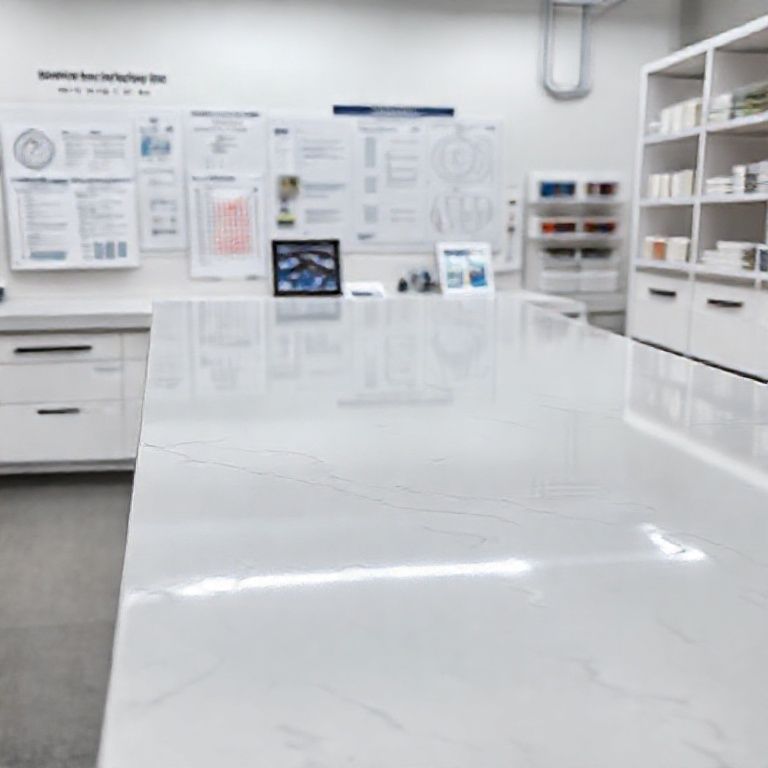
Artificial Stone: Artificial stone, also known as cultured stone, is a composite material crafted from natural stones like limestone or marble, combined with resin and pigment. This blend is meticulously crafted to mimic the appearance of natural stone while offering a more cost-effective and versatile alternative. The manufacturing process involves pressing the mixture under high heat and pressure, creating a solid, homogeneous material. This process allows for a wide range of colors and patterns, giving artificial stone an unmatched level of customization.
Quartz: In contrast, quartz is a man-made composite material composed primarily of 90% quartz crystal and 10% resin. This high-quality formulation ensures a superior level of durability and an impressive range of colors and patterns. Quartz is manufactured through a proprietary process that fuses powdered quartz with resin under high heat, resulting in a solid surface that is incredibly resilient and virtually indestructible.
Durability:
Artificial Stone: Artificial stone is renowned for its durability and resistance to scratches, chips, and stains. However, it does have its limitations. Since it’s made from natural stone and resin, it can be prone to etching from certain acids, such as fruit juices and vinegar. Over time, the surface can lose its luster, and cleaning requires a bit more effort to maintain its pristine appearance. Despite these drawbacks, artificial stone offers a robust, long-lasting solution for many kitchens.
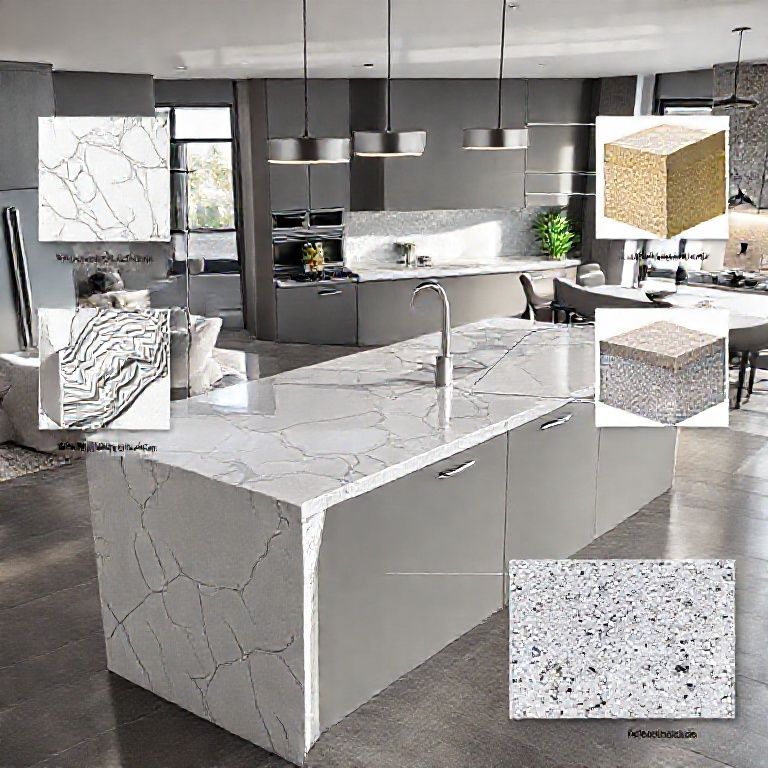
Quartz: Quartz countertops are a game-changer in terms of durability. The material is virtually indestructible, boasting a hardness rating of 9.5 on the Mohs scale, which makes it highly resistant to scratches, stains, and etching. Even the most acidic spills leave no mark on its surface. Quartz also has a low thermal conductivity, meaning it doesn’t get hot to the touch, which makes it safe for placing hot pots and pans directly on the surface. This durability ensures that quartz countertops maintain their beauty and functionality for many years without significant wear or damage.
*Aesthetic Appeal:
Artificial Stone: Artificial stone’s biggest strength lies in its aesthetic versatility. The resin used in its creation allows for an almost limitless array of colors and patterns, offering an exceptional degree of customization. Whether you want a traditional marble look, a unique stone pattern, or even a bespoke design, artificial stone can be tailored to meet your specific aesthetic needs. This flexibility makes it a popular choice for those looking to create a unique and personalized kitchen space.
Quartz: Quartz countertops also offer an impressive range of colors and patterns, but they do it in a different way. The quartz crystal gives it a sleek, modern appearance that is both elegant and practical. Quartz’s design flexibility allows for seamless integration into any kitchen style, from ultra-modern to traditional. Its polished surface reflects light beautifully, creating an ambiance of sophistication and luxury. The material’s consistent quality ensures that every piece looks uniform and professional, enhancing the overall aesthetic appeal of your kitchen.
Maintenance, Cost, and Installation
While composition, durability, and aesthetic appeal are crucial factors in choosing between artificial stone and quartz, understanding the maintenance requirements, cost implications, and installation processes are equally important for making an informed decision.
Maintenance:
Artificial Stone: Maintaining artificial stone countertops requires some diligence. Since it’s composed of natural stone and resin, it’s essential to use a neutral pH-balanced cleaner to avoid etching the surface. Regular cleaning with a soft cloth and a mild soapy solution will keep it looking fresh. However, it’s important to avoid abrasive cleaners or sponges that can scratch the surface. Additionally, because artificial stone can still be susceptible to acidic substances, it’s wise to use cutting boards and other protective measures when handling acidic foods.
Quartz: One of the standout features of quartz countertops is their ease of maintenance. Due to their hardness and resistance to stains, scratches, and etching, quartz countertops require minimal upkeep. A simple wipe with a damp cloth and a neutral cleaner is typically sufficient to keep them looking pristine. Quartz’s non-porous surface means that spills and stains do not penetrate the material, making it an excellent choice for busy households and commercial kitchens alike. The low maintenance nature of quartz makes it a practical and attractive option for those looking for low-effort, long-term solutions.
Cost:
Artificial Stone: Artificial stone is generally more affordable than quartz, making it an attractive option for those on a budget. The cost varies depending on the quality of the material and the complexity of the design. On average, artificial stone countertops range from $40 to $60 per square foot. This price range makes it accessible for many homeowners and a popular choice for those seeking a cost-effective yet stylish kitchen upgrade.
Quartz: Quartz countertops, while slightly more expensive, offer a premium quality that justifies the higher cost. The average price for quartz ranges from $60 to $100 per square foot, reflecting its superior durability and aesthetic appeal. Despite the higher initial investment, the long lifespan and low maintenance requirements of quartz can result in significant savings over time. For many, the enhanced durability and beauty of quartz make it a worthwhile expense.
Installation:
Artificial Stone: Installing artificial stone countertops is relatively straightforward. The material is typically supplied in large slabs that can be cut to fit the dimensions of your kitchen. The installation process usually involves securing the countertop to the cabinet with adhesive or brackets. Because artificial stone is relatively heavy, it’s important to ensure that the installation is secure and stable to prevent any potential issues. Professional installation is recommended to ensure that the countertop is properly anchored and aligned.
Quartz: Quartz countertops also come in large slabs that are easy to cut and install. The installation process is similar to that of artificial stone, with the primary difference being the need for extra care due to quartz’s high hardness. Quartz’s non-porous surface means that adhesives and fasteners must be carefully selected to ensure a secure bond without damaging the surface. Professional installation is highly recommended to ensure that the quartz countertop is properly anchored and that the edges are seamlessly integrated into your kitchen design.
Conclusion:
Choosing between artificial stone and quartz for your kitchen countertops involves weighing several factors, including composition, durability, aesthetic appeal, maintenance, cost, and installation. Artificial stone offers a versatile, customizable, and budget-friendly option, perfect for those looking to create a unique kitchen space without breaking the bank. On the other hand, quartz provides unparalleled durability, low maintenance, and a sleek, modern appearance, justifying its higher cost with its long-term benefits.
Whether you opt for the creative flexibility of artificial stone or the enduring elegance of quartz, both materials offer exceptional qualities that can elevate the beauty and functionality of your kitchen. Consider your specific needs, preferences, and budget to determine which countertop material will best enhance your culinary space.