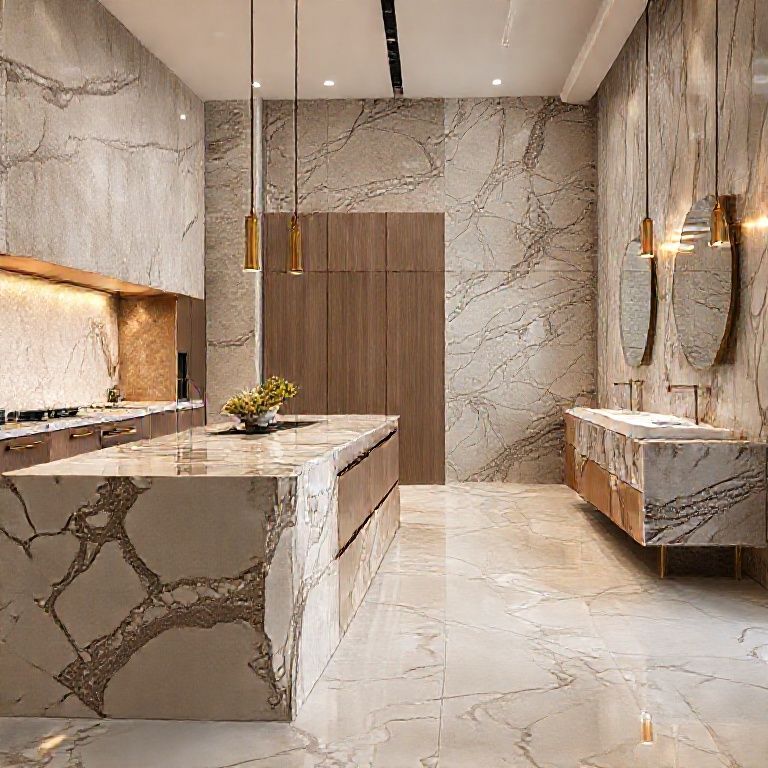
The Environmental Footprint of Synthetic Marble
Introduction to Synthetic Marble
Synthetic marble, often referred to as engineered stone, has gained significant popularity in recent years due to its durability, versatility, and aesthetic appeal. Unlike natural marble, which is mined directly from the earth, synthetic marble is created in a lab using a combination of quartz, resins, and pigments. This process allows for an impressive array of colors and patterns, often surpassing those found in natural stone.

Manufacturing Process and Environmental Impact
The production of synthetic marble involves several stages that contribute to its overall environmental footprint:
Material Sourcing: The primary component of synthetic marble is quartz, which is relatively abundant. However, the extraction and processing of quartz can still impact local ecosystems. The resins and pigments used are synthetic chemicals, and their production involves energy-intensive processes.
Energy Consumption: The manufacturing process for synthetic marble requires significant energy, particularly during the heating and pressing stages necessary to bond the quartz particles together. This energy consumption often comes from non-renewable sources, contributing to carbon emissions.
Chemical Usage: The use of resins and other synthetic chemicals in the creation of synthetic marble raises concerns about chemical waste. Although these chemicals are generally non-toxic, their disposal and the potential for leaks during manufacturing processes can pose environmental risks.
Comparative Analysis with Natural Marble
While synthetic marble offers many benefits, it’s crucial to compare its environmental impact with that of natural marble:
Resource Depletion: Natural marble mining can lead to significant ecological disruption, including habitat destruction and the depletion of non-renewable resources. However, sustainable mining practices can mitigate these impacts.

Carbon Footprint: The carbon footprint of synthetic marble is notably higher due to the energy-intensive manufacturing process and the use of non-renewable energy sources. In contrast, natural marble, while it involves some energy for mining and transportation, generally has a lower carbon footprint over its lifecycle.
Chemical Use: Natural marble does not involve the use of synthetic chemicals in its formation, reducing potential chemical pollution. However, the mining process itself can lead to soil and water contamination if not managed properly.
Conclusion
In evaluating the environmental footprint of synthetic marble, it’s clear that while it offers impressive benefits in terms of durability and design flexibility, its production process has notable environmental drawbacks. The high energy consumption, chemical usage, and non-renewable resource dependency contribute to its overall environmental impact. To make a truly green choice, it’s essential to weigh these factors against the benefits of synthetic marble.

The Ecological Considerations of Natural Marble
Introduction to Natural Marble
Natural marble, a metamorphic rock formed from limestone through intense heat and pressure over millions of years, has been a favored material for centuries. Its timeless beauty and elegance have made it a staple in high-end construction and interior design. However, the environmental considerations of using natural marble are complex and multifaceted.
Mining and Resource Extraction
The extraction of natural marble involves several ecological considerations:
Habitat Disruption: The mining process can significantly disrupt local ecosystems, leading to habitat destruction and the displacement of local flora and fauna. The excavation and processing of natural marble can also lead to soil erosion and landslides.
Water Usage: Marble mining often requires substantial water resources for dust control and other processes. This can be particularly problematic in regions where water is already scarce.
Air Quality: The mining and transportation of natural marble can lead to air pollution, particularly from dust and emissions from heavy machinery.
Sustainable Mining Practices
To mitigate the ecological impact of natural marble, several sustainable mining practices can be adopted:
Reforestation and Habitat Restoration: Implementing reforestation projects and restoring habitats can help offset the ecological disruption caused by mining. This involves planting native species and restoring the natural landscape to its pre-mining state.
Water Management: Efficient water management practices, including the recycling of water and the implementation of dust control measures, can minimize the environmental impact of water usage during mining.
Reduction of Emissions: Adopting cleaner technologies and reducing emissions from machinery can help minimize air pollution associated with natural marble mining.
Comparative Analysis with Synthetic Marble
Comparing the ecological considerations of natural marble to synthetic marble reveals several key points:
Long-term Resource Availability: Natural marble is a finite resource, and its extraction can lead to depletion over time. Synthetic marble, while it involves the use of abundant quartz, still relies on the availability of resins and other synthetic materials.
Energy Consumption: While natural marble mining involves some energy consumption, the overall carbon footprint is generally lower than that of synthetic marble production, which is energy-intensive and often reliant on non-renewable energy sources.
Chemical Usage: The use of synthetic chemicals in synthetic marble production raises concerns about chemical pollution. In contrast, natural marble does not involve the use of synthetic chemicals, reducing potential chemical contamination.
Conclusion
When evaluating the ecological considerations of natural marble, it’s essential to recognize both the potential benefits and the environmental challenges associated with its extraction and use. While natural marble offers unparalleled beauty and durability, its mining processes can lead to significant ecological disruption. By adopting sustainable mining practices, however, it is possible to mitigate these impacts and make more environmentally responsible choices.
In conclusion, the debate between synthetic and natural marble revolves around balancing aesthetic appeal, durability, and environmental responsibility. While synthetic marble offers impressive benefits, its production process poses notable environmental challenges. Conversely, natural marble, when mined sustainably, can be a beautiful and durable option, but it requires careful management to minimize its ecological footprint. Ultimately, making an informed and environmentally conscious choice is key to supporting a greener future.