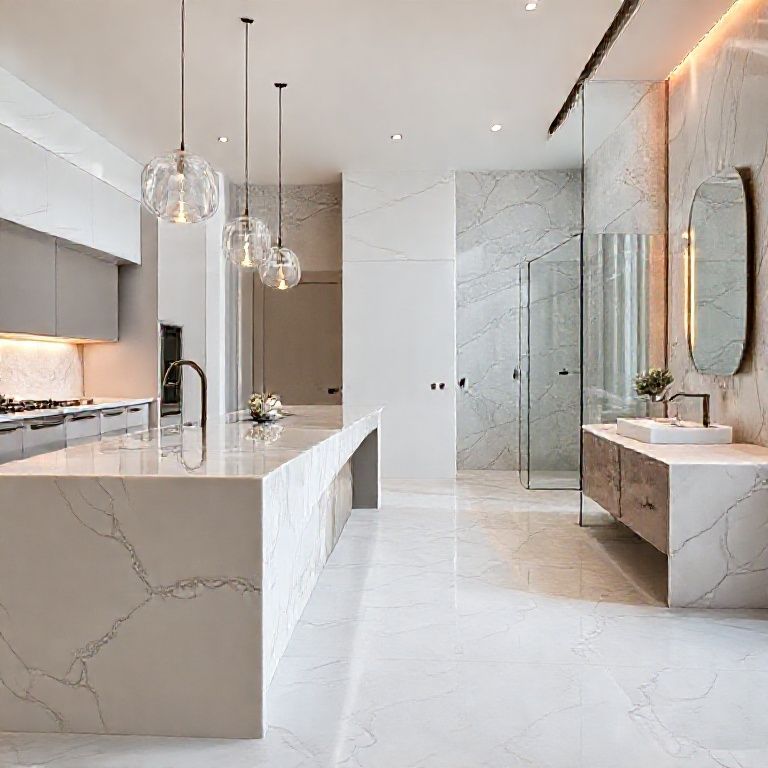
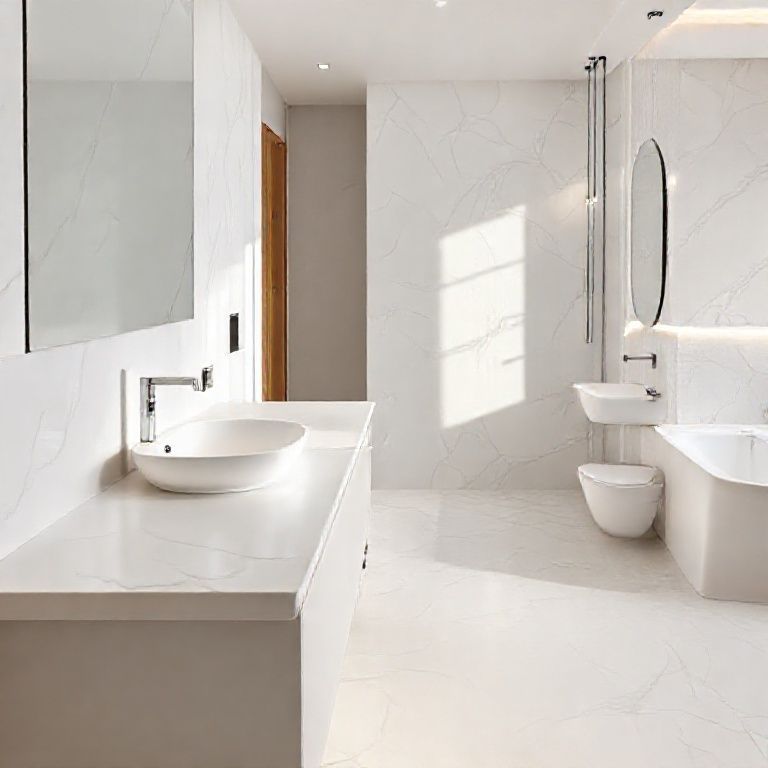
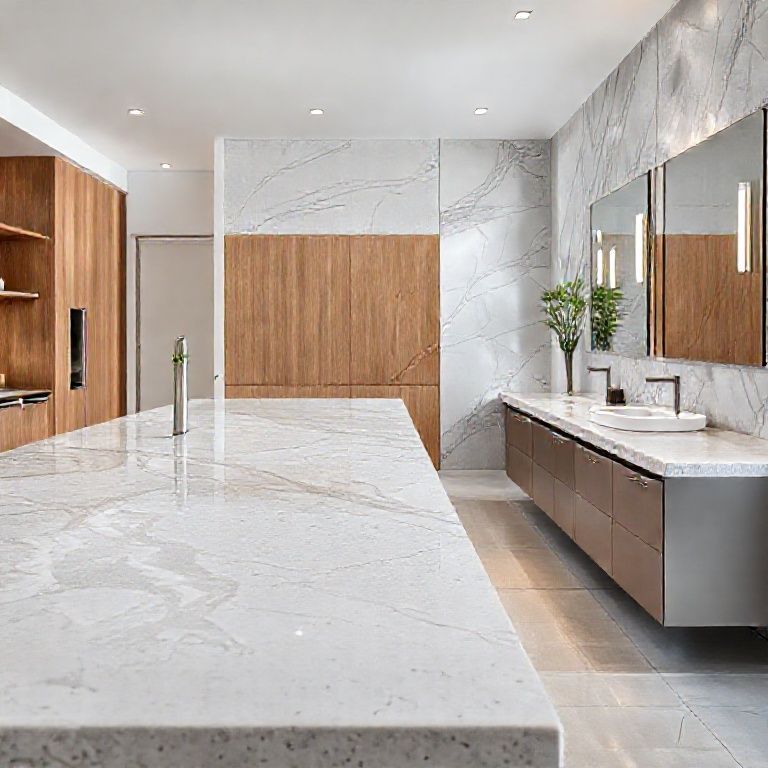
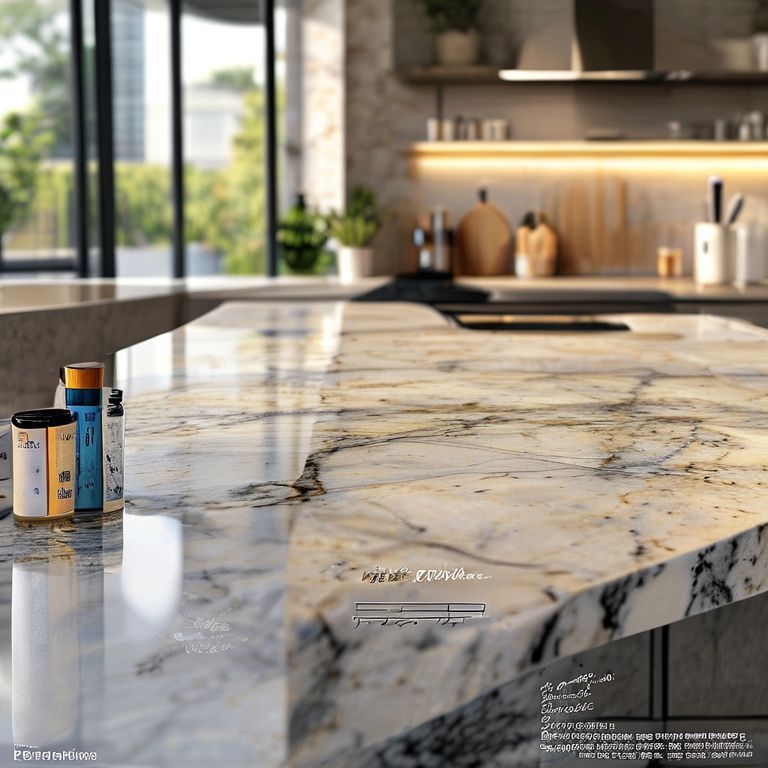
The human fascination with stone is as ancient as our species itself. We have always looked to the earth’s crust for permanence, strength, and a certain silent dignity. However, for all its majesty, natural stone is temperamental. It is porous, prone to cracking, and limited by the whims of geological chance. This is where the story of the artificial slab begins—not as a mere imitation, but as an evolution. It is a story of industrial alchemy, where we take the rawest elements of the planet and re-engineer them into something that nature, in all its billion-year wisdom, simply couldn’t achieve on its own: perfection.

The manufacturing process of artificial slabs—often referred to as engineered stone or quartz—is a meticulous choreography of physics and chemistry. It begins far from the sterile precision of the factory floor, in the rugged terrain of quarries where high-purity quartz and silica are sourced. These aren’t just rocks; they are the skeletal structure of the final product. Quartz, being one of the hardest minerals on the Mohs scale, provides the legendary durability that has made artificial slabs the darling of modern architecture. But before it can become a sleek countertop or a grand floor tile, it must be broken down.
The raw quartz is crushed into varying sizes, ranging from fine powders that feel like flour to granular crystals that catch the light like diamonds. This variation in “grit” is the secret to the slab’s aesthetic soul. Fine powders create a smooth, monolithic look that mimics concrete or soft limestone, while larger aggregates give the slab that deep, shimmering texture that rivals the most expensive granites. Once the minerals are graded and cleaned, they are ready for the “Mixing Stage,” which is where the real magic—and the proprietary secrets—resides.
Imagine a giant, stainless-steel industrial mixer. Into this vessel goes a precise cocktail of ingredients. The quartz makes up about 90% to 93% of the mix, but the remaining percentage is what defines the slab’s character. This includes high-performance polyester resins, which act as the “glue” that binds the minerals together, and various pigments that provide the color. Unlike natural stone, where you are at the mercy of whatever mineral deposits were present during a mountain’s formation, artificial slabs allow for absolute creative control. If a designer wants a slab the color of a midnight sky over the Sahara, or a translucent white that glows under LED lighting, it is achieved here in the mixing vat.
But it’s not just about color; it’s about the “veining.” In the high-end world of artificial marble, creating realistic veins is an art form. Specialized technicians, or increasingly sophisticated robotic arms, inject different colored pastes into the mixture in a way that mimics the organic flow of metamorphic rock. This “randomized precision” ensures that no two slabs look identical, maintaining the “natural” feel that consumers crave while offering the structural integrity they need.
Once the mixture reaches the perfect consistency—a damp, sandy texture that smells faintly of resin—it is transported to the distributor. This machine spreads the mixture into a massive mold, creating a “biscuit” of uncompressed stone. At this stage, the material is fragile, held together by nothing but gravity and the slight stickiness of the resin. It looks like nothing more than a giant tray of wet sand. However, the next step is the defining moment in the manufacturing process: the Vacuum Vibro-Compression.
This is where technology takes over from art. The mold enters a massive press. The air is sucked out to create a total vacuum, ensuring there are no microscopic air pockets or “voids” within the slab. If air were left inside, the stone would be brittle and porous—the very flaws we are trying to avoid. While the vacuum is held, the press applies hundreds of tons of pressure while simultaneously vibrating at a high frequency. This intense physical force packs the quartz crystals so tightly together that they interlock at a molecular level, with the resin filling every conceivable gap. The result is a slab that is virtually non-porous. It won’t absorb wine, it won’t harbor bacteria, and it won’t crack under the thermal shock of a hot pan.
This transformation from a loose mixture to a dense, solid mass is the core of the artificial slab’s superiority. We have taken the raw power of tectonic pressure and condensed it into a process that takes minutes rather than eons. But as the slab emerges from the press, it is still “green.” It has its shape, but it hasn’t yet found its strength. It must now face the fire—or at least, the intense, controlled heat of the curing kiln.
The transition from the vibro-compression press to the curing kiln is the moment of metamorphosis. The “green” slab, though solid to the touch, is chemically incomplete. The polyester resins within the matrix need to undergo polymerization—a process where individual molecules link up to form long, unbreakable chains. This is achieved by moving the slabs into massive, multi-level kilns where temperatures are precisely regulated, usually hovering around 80 to 100 degrees Celsius.
In this warm environment, the slab “bakes.” It’s a slow, steady soak in heat that ensures the resin hardens evenly from the core to the surface. If the temperature fluctuates even a few degrees, the slab could warp or develop internal stresses that might lead to cracking years later. This stage is a testament to the engineering of the facility; the kilns are often the length of a football field, and the slabs move through them with a slow, deliberate grace. When the slab finally emerges from the cooling end of the kiln, it is no longer a mixture of sand and resin. It is a unified, singular piece of engineered rock, harder than almost anything you would find in nature.
However, if you saw a slab at this stage, you might be disappointed. It looks dull, rough, and somewhat industrial. Its edges are jagged, and its surface is matte and uneven. This is because the true beauty of the stone is currently “locked” beneath a thin skin of manufacturing residue. The next phase, known as “Calibration and Polishing,” is where the aesthetic promise of the slab is finally realized.
First comes the calibration. Large diamond-tipped grinding heads shave the slab down to a precise thickness. Whether the order is for a 12mm thin-profile modern countertop or a 30mm traditional slab, the calibration machines ensure the thickness is uniform across the entire surface, within a fraction of a millimeter. This is vital for installers; a slab that isn’t perfectly flat is a nightmare to seam and join.
Once the slab is perfectly level, it enters the polishing line—a mesmerizing series of rotating heads, each fitted with progressively finer abrasives. The first heads use coarse diamond grits to remove the scratches from the calibration phase. As the slab moves down the line, the grits become finer and finer, eventually moving to resin-bonded pads that buff the surface. It is here that the colors suddenly pop. The pigments that were mixed in the first stage regain their vibrancy, and the quartz crystals begin to catch the light. Depending on the desired finish, the process can stop at a “honed” matte look, or continue until the surface is a “polished” mirror that reflects everything in the room.
Quality control follows, and it is rigorous. In a high-end facility, every slab is scanned by high-resolution cameras and inspected by human eyes under specialized lighting. They look for “color pooling,” where pigment didn’t mix correctly, or “contamination,” where a stray piece of different colored stone might have fallen into the mix. Because artificial stone is sold on the promise of consistency, any flaw is a failure. Slabs that pass inspection are then given a unique barcode, tracking their entire genealogy—from the batch of quartz used to the specific hour they were pressed.
The final stage is the “Finishing Touches.” Some slabs receive a protective treatment, though the nature of engineered stone makes this largely redundant. Most importantly, the slabs are moved to the warehouse, standing like giant monoliths in a gallery of industrial art. From here, they are shipped across the globe to be fabricated into the surfaces of our lives.
What makes this entire process so compelling is the philosophy behind it. We aren’t just making a building material; we are solving a problem of the natural world. Natural marble is gorgeous, but it stains if you look at it wrong. Granite is tough, but its patterns can be chaotic and difficult to book-match. Artificial slabs bridge that gap. They offer the romantic aesthetics of the Italian Alps with the chemical resistance of a laboratory worktop.
In the modern era, the process is also becoming increasingly “green.” Leading manufacturers now use recycled glass and mirrors in their mixes, and water filtration systems allow the massive amounts of water used in the polishing stage to be recycled in a closed-loop system. The manufacturing of artificial stone has moved from a dusty, industrial affair to a high-tech, sustainable craft.
When you run your hand across a finished artificial slab, you are touching the result of a thousand small victories. You’re feeling the grit of the quarry, the precision of the vacuum, the heat of the kiln, and the finesse of the polishing diamond. It is a product of human ingenuity that respects the raw materials of the earth while demanding more from them. In the end, the “artificial” label is a bit of a misnomer. There is nothing fake about it—it is simply stone, reimagined for a world that demands both beauty and brawn.