The Ultimate Showdown: Countertop Choices – Is It Better to Opt for Artificial Stone or Quartz?
When it comes to choosing the perfect countertop for your kitchen or bathroom, the options can be overwhelming. Among the most popular choices today are artificial stone and quartz. Both materials have unique features that make them appealing to different types of homeowners. In this comprehensive guide, we will delve into the world of artificial stone and quartz, comparing their pros, cons, durability, maintenance, cost, and design flexibility to help you make an informed decision.
What is Artificial Stone?
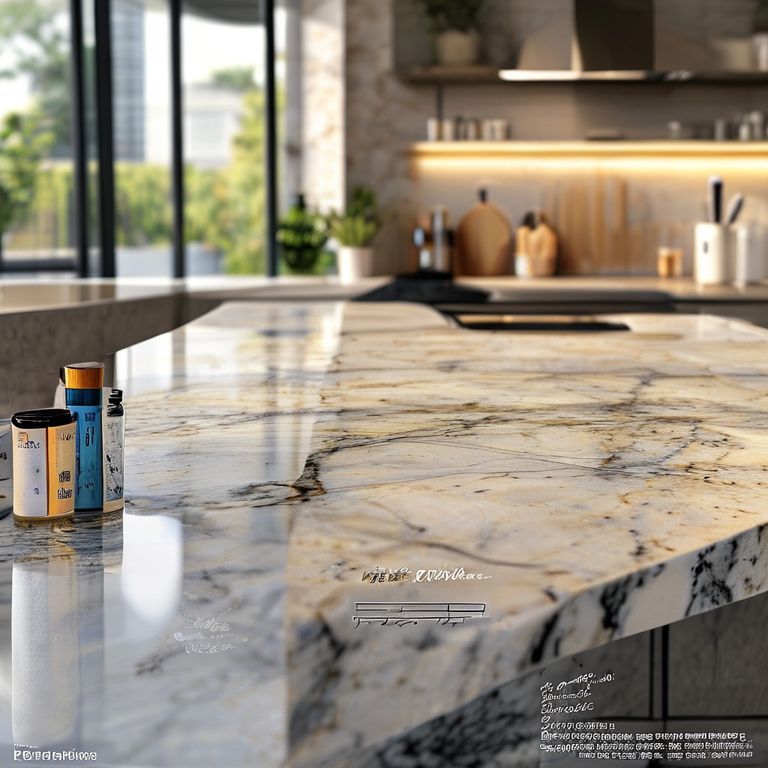
Artificial stone, also known as cultured stone, is a composite material created from a mixture of marble dust, bonding resin, and pigments. This mixture is then poured into molds and allowed to cure, resulting in a product that closely resembles natural stone. The process of creating artificial stone allows for a wide range of colors and patterns, making it a versatile option for various design preferences.
Pros of Artificial Stone:
Versatility in Design: Artificial stone is incredibly versatile, offering a wide array of colors, patterns, and finishes. You can mimic almost any natural stone look, from classic marble to unique and contemporary designs.
Durability: Despite its composite nature, artificial stone is highly durable. It is resistant to scratches, stains, and chips, making it a long-lasting option for high-traffic areas.
Affordability: Generally, artificial stone is more affordable than natural stone alternatives. This makes it a popular choice for homeowners who want high-quality countertops without breaking the bank.
Low Maintenance: Artificial stone requires minimal maintenance. It is easy to clean with simple household cleaning products, and it doesn’t require sealing like some other materials.
Ease of Repair: If artificial stone does get damaged, it is relatively easy to repair. Small scratches or chips can often be filled with matching resin to restore the surface.
Cons of Artificial Stone:
Weight: Artificial stone is heavier than some other countertop materials, which can be a consideration during installation, especially in areas with limited access.
Heat Resistance: While it’s highly durable, artificial stone is not as heat-resistant as natural stone. It can still discolor under prolonged exposure to high heat.
What is Quartz?
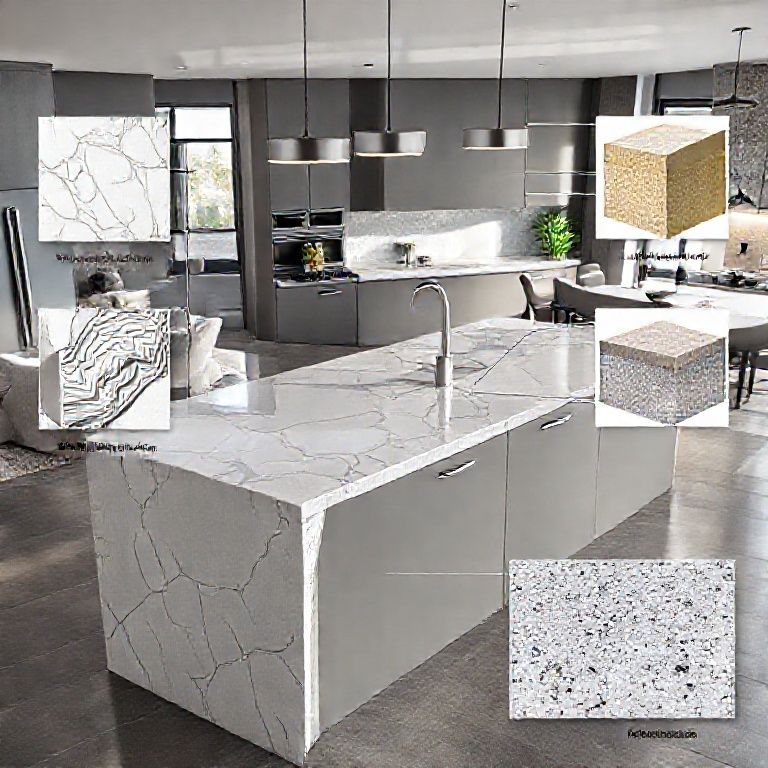
Quartz is a synthetic countertop material made from 93% quartz crystal and 7% resin. It is created through a process of mixing quartz sand with resin and then pressing and curing it at high temperatures. The result is a solid surface that combines the beauty of natural stone with the durability and maintenance benefits of composite materials.
Pros of Quartz:
Exceptional Durability: Quartz is incredibly tough and scratch-resistant. It can withstand high levels of wear and tear, making it a long-lasting option for both kitchen and bathroom countertops.
Heat Resistance: One of the standout features of quartz is its exceptional heat resistance. It can handle pots and pans directly on the surface without risk of discoloration or damage.
Low Maintenance: Quartz countertops require minimal maintenance. They are easy to clean and do not need sealing or special treatments.
Variety of Colors: Quartz offers a vast array of colors and patterns, allowing for extensive customization to match any design aesthetic.
Environmentally Friendly: Quartz is a more sustainable option as it does not rely on the extraction of natural resources.
Cons of Quartz:
Cost: While quartz is more affordable than some natural stone options, it is generally more expensive than artificial stone. The cost can be a barrier for some homeowners.
Installation: Installing quartz countertops can be more challenging than other materials due to its hardness and weight. It may require professional installation to ensure proper fitting and sealing.
Cut and Fit: If a cut or custom fit is needed, quartz can be more difficult to work with compared to artificial stone, which can be cut and shaped more easily.
Conclusion:
Both artificial stone and quartz offer unique benefits that make them excellent choices for modern countertops. Artificial stone stands out for its versatility in design, affordability, and low maintenance, while quartz excels in durability, heat resistance, and a wide range of color options. Ultimately, the choice between artificial stone and quartz will depend on your specific needs, budget, and design preferences.
In the next part of our series, we will delve deeper into the installation process, maintenance tips, and long-term considerations for both artificial stone and quartz countertops. Stay tuned to make the best decision for your home renovation project!
The Ultimate Showdown: Countertop Choices – Is It Better to Opt for Artificial Stone or Quartz?
Having explored the basics of artificial stone and quartz, we now turn our attention to the installation process, maintenance tips, and long-term considerations for both materials. This comprehensive guide will provide you with all the information you need to make an informed decision on which countertop material is best for your home.
Installation Process:
Artificial Stone:
Surface Preparation: The installation of artificial stone countertops begins with thorough surface preparation. The area where the countertop will be installed should be clean and free of any debris. The sub-surface should be flat and level to ensure a smooth installation.
Cutting and Fitting: Artificial stone is relatively easy to cut and shape. It can be trimmed using a standard saw or cutting tool, allowing for custom sizes and designs. Once cut, the countertop should be fitted into place, ensuring it is level and securely anchored to the cabinet or wall.
Sealing: While artificial stone does not require sealing like natural stone, it is still recommended to apply a clear sealant to protect the surface from stains and scratches. This step is optional but can enhance the longevity of your countertop.
Quartz:
Surface Preparation: Similar to artificial stone, the surface where quartz countertops will be installed must be clean, level, and free of any debris. Proper surface preparation is crucial for a seamless installation.
Cutting and Fitting: Quartz is harder and heavier than artificial stone, making it more challenging to cut. It often requires specialized tools such as diamond-tipped saws. Once cut, the countertop should be fitted into place, ensuring it is level and securely anchored.
Sealing: Quartz countertops do not require sealing as they are inherently non-porous. However, it’s important to use a high-quality cleaner to maintain their shine and appearance.
Maintenance Tips:
Artificial Stone:
Cleaning: Artificial stone countertops are easy to clean. Use a mild detergent and a soft cloth to wipe down the surface. For tougher stains, a mixture of baking soda and water can be used as a gentle abrasive.
Avoiding Heat: Although artificial stone is durable, it is not as heat-resistant as quartz. To avoid discoloration, avoid placing hot pots and pans directly on the surface. Use trivets or pot holders when possible.
Minor Repairs: For minor scratches or chips, a matching resin can be used to fill in the imperfections. This can often be done at home with a few simple steps.
Quartz:
Cleaning: Quartz countertops are also easy to clean. Use a soft cloth and a mild soap solution to wipe down the surface. For tougher stains, a non-abrasive cleaner designed for quartz can be used.
Avoiding Heat: Quartz is highly heat-resistant, but it’s still best to avoid placing extremely hot items directly on the surface to prevent any potential damage.
Long-Term Care: To maintain the appearance of your quartz countertop, avoid using abrasive cleaners or cutting boards on the surface. Use cutting pads to protect the surface from scratches.
Long-Term Considerations:
Artificial Stone:
Durability: While artificial stone is highly durable, it is not as long-lasting as natural stone or quartz. Over time, it can develop minor scratches and chips, although these can often be repaired.
Stain Resistance: Artificial stone is resistant to stains but can still be affected by prolonged exposure to acidic substances like lemon juice or vinegar. Using coasters and cutting boards can help prevent this.
Cost: Artificial stone is generally more affordable than quartz, making it a cost-effective option for those looking to upgrade their countertops without a significant investment.
Quartz:
Durability: Quartz is one of the most durable countertop materials available. It is highly resistant to scratches, chips, and stains, ensuring a long-lasting and low-maintenance surface.
Heat Resistance: As mentioned, quartz is exceptionally heat-resistant, making it ideal for high-traffic kitchen areas where hot pots and pans are common.
石英石的长期效益:
高耐用性:石英石的耐用性和耐刮擦性非常出色,这使它在厨房和浴室这样的高频使用环境中表现得尤为出色。它的耐刮擦等级通常非常高,能够应对日常使用中的各种磨损。
耐热性:石英石的耐热性极佳,这意味着它能够直接承受高温,而不会发生变形或损坏。这点对于厨房台面尤其重要,因为它能够防止热斑和其他热损伤。
抗菌性:由于石英石是一种无孔材料,它不容易积累细菌和其他微生物。这对于厨房和浴室这种需要保持清洁的区域尤为重要。
人造石台面的优势:
多样化设计:人造石台面的设计选择非常多样。由于它是通过混合和压制制成的,可以模仿几乎任何天然石材的外观。你可以找到适合各种风格和喜好的设计。
成本效益:相对于石英石,人造石台面的价格通常更低。这使它成为那些希望在预算内获得高品质台面的人的理想选择。
易于维修:如前所述,人造石台面较容易修复。如果有小的划痕或损坏,可以通过填补和重新涂色来修复。
环保和可持续性:
石英石:作为一种完全合成的材料,石英石在制造过程中不会产生大量的废弃物。尽管它是人造的,但它的使用可以减少对天然石材的开采,从而减少环境影响。
人造石:人造石的生产过程也较为环保,因为它利用了废弃的天然石材碎片。这种方式不仅减少了浪费,还减少了新材料的开采和制造。
最终选择:
选择哪种材料最终取决于你的具体需求和偏好:
如果你的主要关注点是耐用性和高维护性,石英石无疑是一个更好的选择。它的耐用性和耐热性使其成为厨房和浴室的理想选择。
如果你更倾向于经济实惠且具有设计灵活性,人造石台面会是一个更好的选择。它的多样化设计和较低的成本使其适合那些希望在预算内获得高品质外观的人。